
Home Improvement
Keeping Homes Safe from Ice Dams with Modern Heating Cable Solutions

Key Takeaways
- Ice dams form when snow melts unevenly and refreezes, often causing costly damage.
- Modern heating cables provide an efficient preventative solution for ice dam formation, especially when combined with proper insulation and ventilation.
- Understanding the different types of heating cables and following best-practice installation methods are crucial for safety and effectiveness.
- Annual maintenance and thoughtful upgrades to home insulation and ventilation further reduce the risk of ice dams.
Table of Contents
- Understanding Ice Dams
- The Role of Heating Cables
- Types of Heating Cables
- Installation Best Practices
- Maintenance and Safety Considerations
- Cost and Energy Efficiency
- Alternative Ice Dam Prevention Methods
- Conclusion
Understanding Ice Dams
As winter takes hold, freezing temperatures and snowfall test the durability of homes in colder climates. One of the most persistent threats is the formation of ice dams, ridges of ice that form along the edges of roofs when snow melts and refreezes. Damage from ice dams can include water leaks, roof and gutter issues, and even internal water damage. To effectively prevent these issues, homeowners are increasingly turning to heating cables to maintain clear water pathways and protect their property.
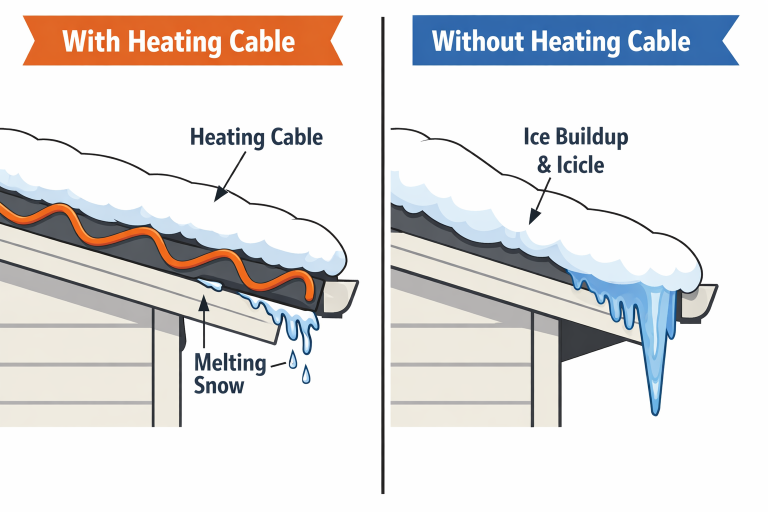
Ice dams form when heat escapes from the home, warming the roof and melting the snow on its underside. This melted water travels to the roof edge, freezes as temperatures drop, and gradually builds a dam that blocks additional meltwater from draining. The trapped water often seeps beneath shingles, compromising the roof’s structure and encouraging mold growth.
The Role of Heating Cables
Heating cables, sometimes called heat tape or de-icing cables, are designed to keep water flowing freely off roofs by warming roof edges, gutters, and downspouts. They are especially valuable for homes where attic insulation and ventilation alone cannot stop ice dams from forming. In regions prone to heavy snow and repeated freeze-thaw cycles, heating cables can play a vital role in protecting roofing systems and extending the life of structural materials.
For those installing new roofing or upgrading existing systems, professionals recommend integrating heating cables as part of an overall strategy to combat winter hazards. For general maintenance and preventive upgrades, a look at roofing solutions tailored to local climate conditions is highly recommended.
Types of Heating Cables
- Self-Regulating Cables: These cables modulate their heat output based on the surrounding temperature, making them highly energy-efficient and reducing the risk of overheating. Self-regulating cables are especially beneficial in areas with wide temperature swings or where constant monitoring isn’t feasible.
- Constant-Wattage Cables: These maintain a stable level of heat regardless of the ambient temperature. While effective in consistently cold conditions, they may use more electricity and must be installed carefully to avoid overheating sensitive roofing materials.
Installation Best Practices
Effectiveness and safety begin with proper installation. A well-thought-out heating cable layout is critical for optimal performance, typically focusing on vulnerable areas such as roof eaves, valleys, and gutter edges. Homeowners should always follow the manufacturer’s guidelines and use only approved clips or fasteners that will not damage the roof surface.
Electrical connections for heating cables must be weather-resistant and installed to local codes. Consulting with a licensed electrician is strongly advised to ensure both safety and compliance. According to WebMD, poor installation not only reduces efficiency but can also pose fire hazards or void warranties.
Maintenance and Safety Considerations
Keeping heating cables in top condition involves annual inspection and regular gutter maintenance. Look for signs of wear, breakage, or exposed wires. Blocked gutters or downspouts can render heating cables ineffective, so clearing debris before winter is essential. Always power off heating cables before cleaning or repairs, and follow the manufacturer’s safety instructions to prevent accidents or equipment failure. For comprehensive winter home maintenance, guidelines from The Hanover Insurance Group can be valuable.
Cost and Energy Efficiency
Investing in heating cables requires balancing upfront costs with long-term savings. Self-regulating cables are typically more expensive to purchase but offer ongoing savings by using power only when needed. On the other hand, constant-wattage cables may have lower initial costs but can consume more electricity. Preventing water damage and roof repairs can far outweigh the price of proper preventive measures, making the investment in quality heating cables worthwhile for many homeowners.
Alternative Ice Dam Prevention Methods
Improved insulation and ventilation are critical measures for preventing ice dams on roofs. Strengthening attic insulation effectively reduces heat transfer from the home to the roof, thereby minimizing the melting and refreezing that cause ice dams. Additionally, ensuring proper attic ventilation is essential for maintaining consistent roof temperatures, which helps in preventing the accumulation of snowmelt. These two strategies work harmoniously as part of a comprehensive approach to ice dam mitigation. Furthermore, manually removing excess snow from the roof using a roof rake can significantly reduce the risk of ice dam formation. This method is particularly advantageous for smaller roofs or during light snowfall, allowing homeowners to better safeguard their roofs.
Conclusion
Forming a comprehensive winter maintenance plan to protect your home against ice dams is essential in regions with harsh winters. Modern heating cables, when combined with upgraded insulation, proper ventilation, and regular roof maintenance, provide an effective defense against the hazards of ice dams. Thoughtful prevention not only safeguards your home’s value but also provides peace of mind through the long winter season.

Building A Better Commercial Painting Plan From Prep To Completion

What Makes Legal Marketing Different From Marketing Almost Anything Else?

Why Bar Stools Can Completely Change the Feel of a Kitchen
Ways Proper Garage Door Installation Improves Performance

How to Compare Maine Neighborhoods Before Buying a Home in 2026

The Future of Home EV Charging: Trends, Benefits, and What Drivers Need to Know

How Septic Tank Pumping Services in Huntsville AL Protect Soil Absorption Systems

Foundation Crack Repair Using Injection Methods

How do you know when you need to change your primary care doctor
The Importance of Accurate Inventories Before Moving Day
Ways Proper Garage Door Installation Improves Performance
What Makes Legal Marketing Different From Marketing Almost Anything Else?
Why Bar Stools Can Completely Change the Feel of a Kitchen