
Business
How to Plan a Safer, Longer-Lasting Industrial Metal Fabrication Project in Lufkin, Texas

Table Of Contents
- Why Planning Matters Before Fabrication Begins
- Define the Project’s Needs
- Choose Materials for the Working Environment
- Select the Right Welding Process
- Build Safety Into Every Step
- Use Quality Control Checkpoints
- Plan for Heat, Wear, and Corrosion
- Consider Modern Welding Technology
- A Practical Project Checklist
- Common Questions About Fabrication Projects
Industrial fabrication projects in Lufkin, Texas, often operate under demanding conditions, including outdoor moisture, summer heat, vibration, heavy use, and exposure to dirt or chemicals. Planning before material is cut or welded helps ensure that a bracket, skid, guard, frame, or repair component serves its intended purpose rather than becoming a source of repeated adjustments.
A well-defined plan connects design, material selection, welding method, inspection, and maintenance needs. For projects involving fabrication and welding, the most useful starting point is to consider how the finished component will operate, what it will support, and what conditions it must withstand over time. Those seeking fabrication & welding services in Lufkin should ensure their fabricators understand these planning principles.
Why Planning Matters Before Fabrication Begins
Early planning reduces the risk of rework due to incorrect dimensions, inaccessible weld locations, unsuitable materials, or missing installation details. A support frame may look straightforward on paper, but its design changes when it must carry a moving load, tolerate vibration, fit around existing piping, or remain stable on an uneven surface.
Measurements, tolerances, and drawings should be reviewed before fabrication begins. When a project also requires bored, turned, faced, or repaired components, coordinating with a machine shop early can help align fabricated features with mating shafts, holes, bushings, or mounting surfaces.
Define the Project’s Needs
Start with the component’s job, rather than its shape. Identify the loads it will carry, whether it will experience pressure, motion, impact, or changing temperatures, and whether it will be installed indoors, outdoors, underground, or near process chemicals. Determine whether a drawing, code, customer specification, coating requirement, or inspection record applies.
Future access matters as well. A component that can be inspected, cleaned, repaired, or replaced without dismantling surrounding equipment may be easier to maintain. Including lifting points, drainage, removable guards, and adequate clearance during design can prevent difficult field modifications later.
Choose Materials for the Working Environment
Carbon steel, stainless steel, and aluminum each serve different purposes. Carbon steel is widely used where strength, availability, and cost are important. Stainless steel can be useful where corrosion resistance is a central concern. Aluminum can reduce weight, but its material behavior and welding requirements differ from those of steel.
Strength alone should not decide the material. Consider moisture, chemical contact, abrasion, impact, operating temperature, weight limits, and expected repair needs. Confirm the required grade and thickness before work starts, since similar-looking metals can require different filler materials, preparation methods, and welding settings.
Select the Right Welding Process
The welding process should match the material, thickness, joint design, position, access, and finish requirements. MIG welding is often selected for efficient fabrication of many steel components. TIG welding offers close control and can be useful where a clean appearance or thin material work is important. Stick welding can be practical for certain field conditions and heavier work, while flux-cored welding is commonly considered for applications that benefit from high deposition rates or outdoor capability.
The fastest process is not automatically the best choice. Joint access, distortion control, required penetration, appearance, and the component’s actual service conditions should guide the decision.
Build Safety Into Every Step
Safety begins during planning, not after the first arc is struck. Welding and cutting hazards include metal fumes, ultraviolet radiation, burns, eye injuries, electrical shock, and crushing hazards, so the work area and procedure should address those exposures before work begins.
- Remove or protect combustible materials near hot work.
- Provide suitable ventilation or local exhaust for fumes and gases.
- Inspect leads, clamps, torches, cylinders, guards, and lifting equipment.
- Use task-appropriate eye, face, hand, body, and hearing protection.
- Keep personnel clear of suspended, unstable, or shifting materials.
Equipment service requires separate attention. Hazardous energy can include electrical, mechanical, hydraulic, pneumatic, chemical, and thermal sources, which is why established energy-control procedures are important when equipment could start, move, or release stored energy unexpectedly.
Use Quality Control Checkpoints
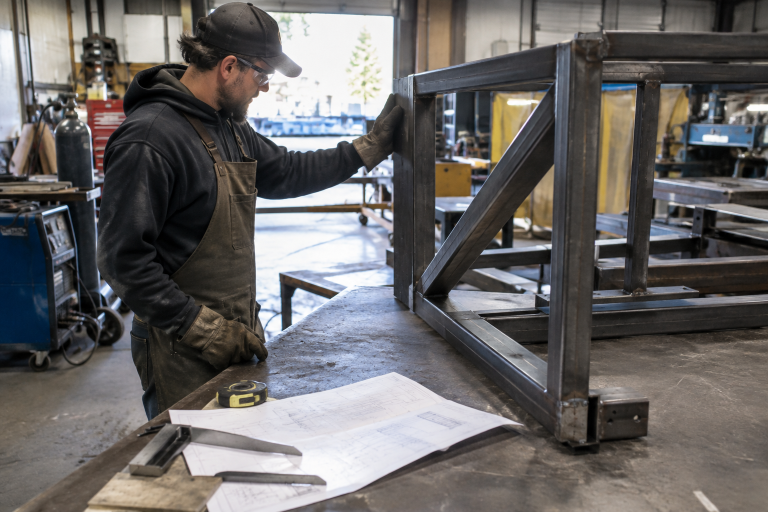
Quality checks work best when they occur throughout fabrication. Verify material identification, dimensions, thickness, cut locations, and joint preparation before assembly. During fit-up, check alignment, root openings, tack weld placement, and fixture stability. Monitor weld sequence because uneven heat can pull a frame out of square or distort a flat surface.
After welding, inspect for visible issues such as cracks, porosity, undercut, incomplete fusion, excessive spatter, and dimensional changes. Record repairs, deviations, and final measurements where documentation is required.
Plan for Heat, Wear, and Corrosion
Fabricated parts can shorten their service life when they are subjected to constant vibration, repeated impacts, high temperatures, abrasive dust, standing water, chemical exposure, or uneven loading. In East Texas, outdoor components may also need thoughtful drainage and protective finishes to limit moisture retention at joints, crevices, and horizontal surfaces.
Useful design choices include smooth load paths, adequate gusseting where needed, protected wear areas, proper coatings, drainage holes, and access for future inspection. Avoiding sharp stress concentrations and designing supports that distribute loads can also help reduce fatigue-related problems.
Consider Modern Welding Technology
Modern tools can improve consistency by solving a defined problem. Digital weld monitoring, portable measurement tools, automated cutting, positioners, robotic welding, improved welding lenses, and ventilation equipment can support repeatable work and reduce unnecessary exposure. Technology does not replace sound drawings, correct material selection, qualified procedures, or skilled judgment.
A Practical Project Checklist
- Define the component’s purpose and service conditions.
- Confirm drawings, dimensions, tolerances, and material grades.
- Select the joint design, welding process, and sequence.
- Review hot work, lifting, ventilation, and energy control risks.
- Check fit-up before final welding.
- Inspect during fabrication and after completion.
- Apply suitable corrosion or wear protection where needed.
- Document final dimensions, repairs, and inspection results.
Common Questions About Fabrication Projects
How Early Should a Fabrication Project Be Planned?
Planning should start when the need is identified. Early information about loads, space limits, materials, and installation conditions helps prevent late design changes.
What Makes a Weld Strong?
Weld strength depends on the base material, joint design, fit-up, filler selection, heat control, welding technique, and inspection. A neat-looking weld is not, by itself, proof that the joint is suitable for service.
Is the Most Expensive Material Always Best?
No. The appropriate material is the one that matches the working environment, performance needs, expected service life, maintenance plan, and project budget.
When Does Automation Make Sense?
Automation can be useful for repetitive tasks, stable designs, higher production volumes, or work that otherwise places people in awkward, hot, or fume-heavy positions. One-off repairs and layout changes may require greater manual flexibility.
Final Thoughts
Dependable metal fabrication starts with clear requirements and continues through material selection, safe work practices, controlled welding, and careful inspection. When the finished application remains the focus from start to finish, industrial components are more likely to fit correctly, perform reliably, and remain maintainable in the years ahead.

How to Plan a Safer, Longer-Lasting Industrial Metal Fabrication Project in Lufkin, Texas

How to Keep Phoenix, Arizona Homes Pest-Ready During Monsoon Season
Floating Dock Contractors and the Basics of a Stable Dock System

How to Judge a Mountain Home Before You Buy in Aspen, Colorado

Building A Better Commercial Painting Plan From Prep To Completion

What Makes Legal Marketing Different From Marketing Almost Anything Else?

Why Bar Stools Can Completely Change the Feel of a Kitchen
Ways Proper Garage Door Installation Improves Performance

How to Compare Maine Neighborhoods Before Buying a Home in 2026

The Future of Home EV Charging: Trends, Benefits, and What Drivers Need to Know
Building A Better Commercial Painting Plan From Prep To Completion
How to Judge a Mountain Home Before You Buy in Aspen, Colorado
Floating Dock Contractors and the Basics of a Stable Dock System
How to Keep Phoenix, Arizona Homes Pest-Ready During Monsoon Season