
Home Improvement
Building A Better Commercial Painting Plan From Prep To Completion

Key Takeaways
- Define every area, repair, coating, and access requirement before work begins.
- Use after-hours, weekend, closure, or phased schedules to protect normal operations.
- Plan for ventilation, safe access, containment, and realistic drying and curing periods.
- Select coatings based on the surface, expected traffic, moisture exposure, and cleaning needs.
- Keep employees and visitors informed before and during each phase of work.
- Inspect the work at key milestones and document products for future maintenance.
A commercial painting project can protect building surfaces, improve visibility, and address wear in busy spaces, but it also affects the people who use the property every day. Whether the site is an office, retail location, warehouse, school, restaurant, or medical setting, thoughtful planning for commercial painting helps minimize disruptions while work is underway. The most successful projects are handled as operational projects rather than simple cosmetic updates. A clear scope, practical schedule, safety procedures, and regular communication help employees, tenants, customers, and delivery teams continue moving through the property with fewer surprises.
Why Commercial Painting Needs A Business Plan
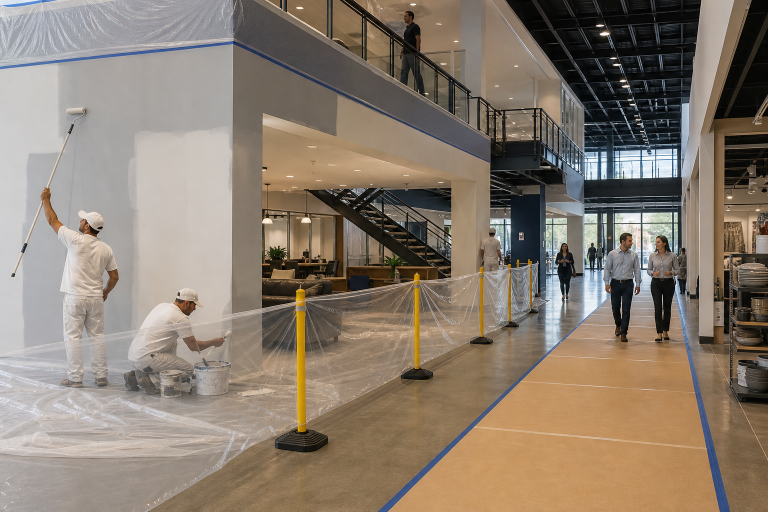
Painting an empty building is very different from painting one that remains occupied. In an active facility, blocked hallways, moved furniture, equipment noise, paint odors, and reduced access can all affect routine work. Planning helps balance the need for surface preparation and quality results with the need to keep the building functional. Property type also shapes the plan. A warehouse may need clear forklift routes and loading access, while a restaurant may need to avoid meal service periods. Offices can often be completed department by department, whereas schools and childcare facilities may need work scheduled during breaks or other low-occupancy periods. Many of the same fundamentals apply to home projects, including surface preparation, material selection, and protection of occupied areas. For readers comparing approaches across property types, residential painting requires similar attention to careful scheduling and clean work zones, even though commercial sites usually involve more complex access and traffic patterns.
Step 1: Define The Full Scope Of Work
A written scope reduces confusion, makes scheduling more realistic, and creates a useful reference if site conditions change. List every surface involved, including walls, ceilings, trim, doors, stairwells, lobbies, breakrooms, parking areas, loading zones, masonry, metal, siding, and exterior features. The scope should also identify preparation work. Cleaning, patching, caulking, sanding, stain blocking, priming, moisture repairs, and removal of failed coatings may take more time than the finish coats themselves. Specify color changes, accent walls, specialty coatings, and the expected number of coats.
Questions To Ask During The Site Review
- Which rooms, entrances, walkways, and loading areas must remain open?
- Where do employees, visitors, tenants, deliveries, and emergency personnel travel?
- Do high surfaces require lifts, scaffolds, or other access equipment?
- Are there signs of water damage, impact damage, stains, peeling paint, or poor adhesion?
- Could an older building contain lead-based paint that requires additional precautions?
Step 2: Build A Realistic Timeline
Break the schedule into inspection, measurements, coating selection, material ordering, preparation, primer, finish coats, drying, curing, touch-ups, cleanup, and final inspection. Include time for moving furniture, protecting inventory, and safely reopening each area. Do not assume that a surface is ready for normal use simply because it feels dry. Drying time and full curing time are not always the same. Weather, humidity, surface condition, ventilation, crew size, building access, and the number of coats can all change the timeline, especially for exterior work.
Step 3: Pick Work Hours That Fit The Building
Choose work periods based on how the property operates. After-hours work can fit offices and retail spaces, while weekend work may reduce weekday disruption. Early mornings can work for businesses that open later, and planned closures may align with holidays, inventory counts, or maintenance windows. When a full closure is impractical, use phased work. Complete one floor, department, corridor, or exterior elevation at a time, then reopen it before moving to the next section. Mark temporary routes clearly so people do not enter active work zones by mistake.
Step 4: Plan For Safety And Indoor Air Quality
Safety planning should start before supplies arrive on site. Painting and paint removal can involve vapors, particles, flammable materials, and associated exposure risks, so effective controls and work procedures should be included in the project plan. Use warning signs, barriers, appropriate protective equipment, secure ladder practices, and fall protection where conditions require it. For indoor work, separate occupied areas from active work, protect air returns when appropriate, keep supplies away from public access, and establish reentry expectations for each space. Managing pollutants through source control and ventilation can help reduce dust and odors during preparation and application.
Step 5: Choose Coatings For The Space
One product rarely suits every surface. High-traffic halls, lobbies, and stairwells may need washable, scuff-resistant finishes. Kitchens, restrooms, and utility rooms may need greater moisture resistance. Exterior surfaces need coatings suited to sun, rain, temperature fluctuations, and the underlying substrate. Consider low-odor or low-VOC options when occupied areas need to reopen quickly. For ramps, service areas, or selected floors, determine whether a slip-resistant coating is appropriate. Product selection should follow the surface condition and use of the space, not only color or upfront cost.
Step 6: Prepare People And Protect Property
Provide advance notice of work dates, restricted areas, temporary entrances, parking changes, delivery instructions, expected noise, and possible odor concerns. A simple communication schedule can include an initial notice, a detailed phase notice several days in advance, visible signs in affected areas, daily updates when needed, and a reopening notice. Move furniture, displays, inventory, and sensitive equipment out of the work zone whenever possible. Cover items that must remain in place, and protect flooring, counters, fixtures, landscaping, vehicles, and walkways. Keep access paths clear for daily activity and emergency response.
Step 7: Inspect At Milestones And Plan Maintenance
Check work after preparation, primer, the first finish coat, and before furniture or equipment returns. During the final walkthrough, look for missed areas, uneven coverage, rough patches, visible repairs, splatter, incomplete cleanup, and surfaces that need touch-ups. Before closing the project, record the paint colors, product types, completion dates, and any areas likely to need future attention. Treating commercial painting as an operations project, with a disciplined scope, schedule, safety plan, and closeout process, helps preserve normal business activity while delivering a durable finish.
Conclusion
A successful commercial painting project depends on balancing a high-quality finish with the business’s daily needs. Clear scope planning, phased scheduling, proper ventilation, safe access, suitable coatings, and consistent communication can reduce unnecessary disruption for employees, customers, and visitors. Planning realistic drying and curing periods also helps prevent rushed reopening or damage to newly painted surfaces. By inspecting the work at key stages and keeping detailed product and maintenance records, property owners can address issues early and simplify future touch-ups. With a practical plan from preparation through final cleanup, commercial painting can improve and protect the property without unnecessarily interrupting normal operations.

Building A Better Commercial Painting Plan From Prep To Completion

What Makes Legal Marketing Different From Marketing Almost Anything Else?

Why Bar Stools Can Completely Change the Feel of a Kitchen
Ways Proper Garage Door Installation Improves Performance

How to Compare Maine Neighborhoods Before Buying a Home in 2026

The Future of Home EV Charging: Trends, Benefits, and What Drivers Need to Know

How Septic Tank Pumping Services in Huntsville AL Protect Soil Absorption Systems

Foundation Crack Repair Using Injection Methods

How do you know when you need to change your primary care doctor
The Importance of Accurate Inventories Before Moving Day
Ways Proper Garage Door Installation Improves Performance
What Makes Legal Marketing Different From Marketing Almost Anything Else?
Why Bar Stools Can Completely Change the Feel of a Kitchen