
Business
Humidity Chamber Testing Methods for Reliable Product Performance

Table of Contents
- Understanding Humidity Chamber Testing
- Importance of Humidity Testing
- Common Humidity Testing Methods
- Best Practices for Consistent Testing
- Industry Standards and Compliance
- Conclusion
Reliability and durability are top priorities for manufacturers who want to meet customer expectations and reduce costly product failures. Simulating environmental stressors, such as heat and moisture, is essential when designing electronics, industrial parts, and consumer goods. One proven way to evaluate performance is through humidity chamber testing, which employs specialized environments for exposing products to controlled humidity and temperature. By utilizing a temperature humidity chamber, companies can ensure robust product development and anticipate product weaknesses before reaching the market.
As consumer and regulatory demands for quality assurance rise, humidity testing has become a staple in many industries’ quality control processes. The threat of component failure due to water vapor, condensation, and temperature changes drives manufacturers to take these evaluations seriously. These chambers allow for precise adjustment of environmental parameters, so every material, circuit, or component can be evaluated under real-world scenarios that mimic global shipping, storage, and deployment conditions.
Humidity exposure can impact the performance, safety, aesthetics, and lifespan of a product. For sectors such as automotive, aerospace, electronics, or pharmaceuticals, rigorous environmental testing is non-negotiable. Whether your priority is meeting international certifications, improving warranty rates, or simply building a better brand reputation, structured humidity chamber protocols are invaluable.
Failing to prioritize environmental testing can mean more product recalls, increased liability, and missed market opportunities. It is no wonder that entire quality programs and laboratory infrastructures are built around these vital assessments.
Understanding Humidity Chamber Testing
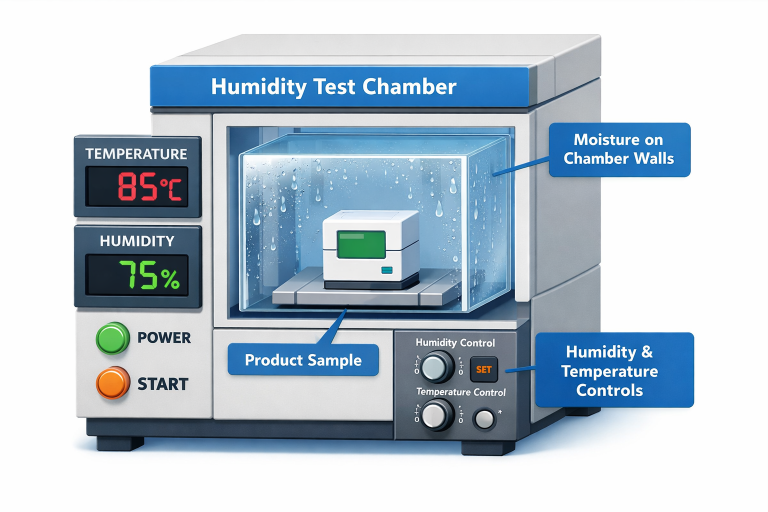
Humidity chamber testing is a laboratory technique in which products are placed inside specially constructed cabinets, or chambers, where temperature and humidity are tightly regulated. This simulation replicates a wide variety of environmental conditions a product might encounter during its lifecycle, including transport across humid ports, storage in tropical climates, or day-night cycles with fluctuating moisture levels.
Technicians are able to manipulate both the percentage of relative humidity and the temperature to evaluate material degradation, rust formation, corrosion, and even subtle electrical performance issues that only emerge in certain moisture conditions. By introducing these stressors in a controlled and systematic way, manufacturing teams can uncover failures before products leave the factory. This results in a more reliable supply chain and a better end-user experience.
Importance of Humidity Testing
Exposure to varying humidity can create significant risks for a wide range of products. Metal surfaces may corrode, polymers and adhesives can degrade, and sensitive electronics might experience insulation breakdown or even catastrophic short circuits. This is especially true for devices operating in outdoor, medical, or transport settings.
- Corrosion: Many metals, especially those not treated with protective coatings, are highly susceptible to rust and corrosion when exposed to ambient moisture, affecting both function and appearance.
- Material Degradation: Plastics, composites, and fibers can swell, warp, or break down, compromising the structural integrity of the product.
- Electrical Failures: Moisture can create tiny conductive pathways or erode circuit isolation, resulting in intermittent or permanent failures of electronic devices.
Humidity chamber testing allows for examination of how long-term exposure may impact a product’s structural and operational integrity, thus helping manufacturers make data-backed decisions about design changes and improvements. Reliable performance in different settings translates directly into fewer returns and better brand loyalty. The impact of humidity on technology and materials is widely recognized by industry experts.
Common Humidity Testing Methods
There are several approaches to evaluating a product’s durability using a humidity chamber. Different methods are chosen based on industry requirements, product type, and anticipated real-world exposure scenarios.
1. Steady-State Humidity Testing
In steady-state tests, products are continuously exposed to fixed humidity and temperature conditions. For example, products may be held at 85% relative humidity and 40°C for 500 hours to simulate consistent tropical exposure. The goal is to determine how materials, seals, or contacts hold up to unchanging but severe environmental stress. This is a common requirement for electronics intended for global use.
2. Cyclic Humidity Testing
Cyclic or dynamic testing involves changing humidity and temperature conditions according to a regular schedule. This simulates natural cycles (like daytime heat and nighttime cooling), the transport of products between climatic zones, or seasonal shifts in ambient conditions. By subjecting products to fluctuating environments, cyclic tests reveal weaknesses that may otherwise go undetected in steady-state assessments. Information about common cycling protocols and their applications can be found at UL Solutions.
3. Condensation Testing
Sometimes specific humidity and temperature sequences are used to cause condensation to form on or within a product’s enclosure. This tests a component’s resistance to water pooling, droplet formation, and internal leaks. Such tests are vital for parts designed to be waterproof or resistant to rain and fog. Condensation testing helps identify potential water ingress points, ensuring safety and reliability when products encounter extreme weather or accidental immersion.
Best Practices for Consistent Testing
Consistency is vital for humidity chamber experiments to be valid and meaningful. Laboratories follow strict protocols and apply best practices for sample placement, monitoring, and routine calibration of their chambers.
- Calibration: The accuracy of results depends on regularly calibrated sensors and control systems within the chamber. Even small deviations can compromise the relevance of data collected over weeks or months.
- Sample Placement: Ensuring that each test sample has equal exposure to the environmental conditions helps guarantee data comparability and limits variables not related to the product itself.
- Monitoring: Ongoing documentation of humidity and temperature through data loggers or graphical interfaces allows for swift corrective action in case of drift or system malfunction.
- Maintenance: Routine inspection and preventive maintenance of chambers prevent breakdowns that might halt testing or damage valuable prototypes.
Following these best practices not only improves the trustworthiness of test outcomes but also reduces long-term operational costs by ensuring fewer repeat tests and less equipment downtime.
Industry Standards and Compliance
Testing to globally recognized industry standards is key to proving product reliability, supporting regulatory filings, and allowing international commerce. Standards create a common language that assures customers and partners of product safety and durability.
- IEC 60068-2-78: This standard focuses on the steady-state damp heat test for evaluating the reliability of electronic components under prolonged humid exposure.
- MIL-STD-810G Method 507.5: Used in military and aerospace testing, this standard specifies rigorous cycles of humidity and temperature for operational and storage reliability of mission-critical equipment.
- ASTM D2247: A standard for assessing the water resistance of coatings in high-humidity environments, often used in construction and automotive industries.
Adhering to these standards demonstrates commitment to quality and can be a requirement for accessing certain markets or contracts.
Conclusion
Humidity chamber testing is indispensable in modern product development and quality control, serving as both a proactive and diagnostic tool for manufacturers. By accurately simulating harsh environmental conditions, businesses can discover vulnerabilities, refine their designs, and confidently meet the performance demands of global consumers. Adhering to industry standards and best practices ensures that products remain highly reliable in any climate or scenario, translating into higher customer satisfaction and long-term commercial success.

Building A Better Commercial Painting Plan From Prep To Completion

What Makes Legal Marketing Different From Marketing Almost Anything Else?

Why Bar Stools Can Completely Change the Feel of a Kitchen
Ways Proper Garage Door Installation Improves Performance

How to Compare Maine Neighborhoods Before Buying a Home in 2026

The Future of Home EV Charging: Trends, Benefits, and What Drivers Need to Know

How Septic Tank Pumping Services in Huntsville AL Protect Soil Absorption Systems

Foundation Crack Repair Using Injection Methods

How do you know when you need to change your primary care doctor
The Importance of Accurate Inventories Before Moving Day
Ways Proper Garage Door Installation Improves Performance
What Makes Legal Marketing Different From Marketing Almost Anything Else?
Why Bar Stools Can Completely Change the Feel of a Kitchen