
Health
Crucial Trends Shaping Healthcare Background Screening

Table of Contents
- AI and Automation in Screening
- Biometric Identity Verification
- Continuous Workforce Monitoring
- Compliance with Evolving Regulations
- Enhancing Candidate Experience
- Global Screening Practices
- Data Privacy and Security
- Integration with HR Technologies
Healthcare organizations are experiencing a period of profound change in their hiring methods, driven primarily by the urgent need for security, regulatory compliance, and patient safety. As employment screening technology advances and regulations evolve, companies have to adapt swiftly to remain effective and compliant. The demand for reliable healthcare employment background screening solutions has never been greater, as organizations must navigate new risks and complexities while prioritizing transparency and ethical practices.
The push for efficiency, accuracy, and security in background screening is directly shaping patient care outcomes and organizational reputation. To maintain trust and operational excellence, leaders are adopting more sophisticated tools and strategies to vet their workforce. Embracing these pivotal trends ensures that healthcare facilities not only safeguard their patients but also attract and retain high-quality talent in a competitive marketplace.
AI and Automation in Screening
The digitization of healthcare background checks has ushered in a wave of efficiency gains, primarily through Artificial Intelligence (AI) and automation. Modern screening platforms leverage AI-driven algorithms to quickly examine large datasets, unveiling discrepancies and potential red flags that manual reviews might miss. For instance, automated systems can expedite criminal record searches, license verifications, and employment history validation, significantly reducing turnaround times.
Yet, integrating AI is not without its challenges. Organizations must ensure that automation does not intrude upon fairness or reinforce existing biases in the talent acquisition process. Research and industry best practices recommend a blend of AI tools and human oversight, as outlined in SHRM studies, to ensure equitable outcomes and reliable decision-making while managing sensitive information.
Biometric Identity Verification
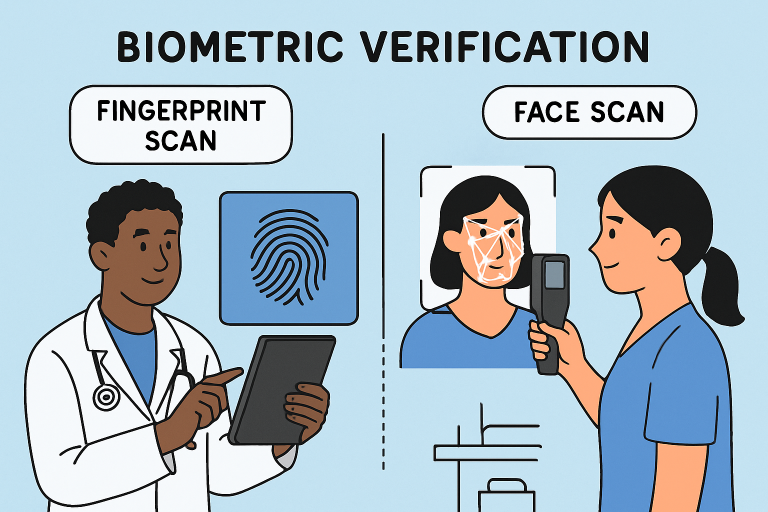
Accurate identity verification is a critical priority for healthcare employers to protect patients and sensitive information. Biometric technologies, including fingerprint scanning, facial recognition, and iris scans, offer stronger security than traditional ID checks or paper-based credentials. By reliably verifying staff identities, these tools help prevent credential fraud, ensure regulatory compliance, and maintain a trustworthy workforce. This is particularly important for roles with access to vulnerable patients, electronic health records, and controlled substances. In hospitals and clinics, biometric verification acts as a frontline safeguard against both internal misuse and external threats, strengthening overall operational security and patient safety.
Continuous Workforce Monitoring
Traditional background checks are static and only valid at the point of hire. To address the risk of developments after onboarding, many healthcare organizations employ ongoing workforce monitoring. Continuous checks allow real-time observation of employees’ licensure, criminal activity, and regulatory compliance. This proactive stance helps HR teams respond rapidly to any new risk, preventing unsuitable individuals from remaining in positions that could inadvertently threaten patient safety or institutional integrity.
Compliance with Evolving Regulations
The legislative landscape for healthcare background screenings is constantly changing, posing a substantial compliance challenge. Updates to the Fair Credit Reporting Act (FCRA), changes to state restrictions on the use of AI in employment decisions, and increased privacy safeguards all demand vigilance from employers. For instance, some states are now mandating independent bias audits for automated hiring technologies. Staying informed and compliant is crucial, as outlined by sources such as DISA, to avoid legal pitfalls and reputational harm.
Enhancing Candidate Experience
Efficient and well-designed background screening processes benefit both organizations and candidates by creating a professional, respectful experience. When companies implement clear communication, digital-friendly document submission, and timely follow-ups, candidates gain confidence in the fairness and transparency of the hiring process. This approach reduces anxiety, builds trust, and conveys that the organization values their time and effort. In industries facing intense competition for top talent, a positive screening experience can differentiate employers, influence candidates’ decisions, and enhance the company’s reputation. Ultimately, streamlined procedures strengthen employer branding while ensuring compliance and operational efficiency in recruitment.
Global Screening Practices
The globalization of healthcare has amplified the need for organizations to recruit talent across international borders. Conducting thorough international background checks involves navigating complex legal frameworks, varying employment regulations, and differing standards for educational and professional qualifications worldwide. Misinterpretation of credentials or noncompliance with local laws can expose organizations to legal risks. Collaborating with screening providers with deep regional expertise and adherence to globally recognized best practices ensures that healthcare employers can verify candidates accurately and efficiently. This approach not only safeguards regulatory compliance but also builds confidence in hiring decisions, promoting operational integrity and organizational trust across diverse regions.
Data Privacy and Security
The transition to digital background checks has heightened the importance of safeguarding sensitive applicant information. Healthcare employers now face increased responsibility to protect personal data through robust cybersecurity measures, including encryption, strict access controls, and secure storage systems. Beyond technical safeguards, organizations must ensure compliance with evolving privacy regulations and clearly communicate how applicant data is collected, used, and retained. Transparency and ethical handling of information not only mitigate legal risks but also foster trust with candidates. Maintaining this balance between regulatory compliance and candidate confidence is essential for protecting both personal data and the organization’s reputation.
Integration with HR Technologies
Integrating background screening programs with existing HRIS (Human Resources Information Systems) and ATS (Applicant Tracking Systems) allows for seamless workflow automation and data sharing. This integration eliminates redundancies, reduces manual entry errors, and creates a consistent experience for both managers and candidates. When background screening becomes a part of a unified HR technology stack, it enables more agile decision-making and supports proactive workforce management.
In summary, healthcare background screening is undergoing a profound transformation driven by AI advancements, biometric authentication, and increasingly complex regulatory requirements. At the same time, organizations are placing greater emphasis on creating a seamless, positive candidate experience. This convergence demands that healthcare employers remain agile, up to date, and transparent in their screening processes. By embracing technology, ensuring compliance, and prioritizing both security and candidate satisfaction, organizations can enhance patient safety, streamline hiring, and attract top talent, securing a competitive advantage in the rapidly evolving healthcare environment.
Ways Proper Garage Door Installation Improves Performance

How to Compare Maine Neighborhoods Before Buying a Home in 2026

The Future of Home EV Charging: Trends, Benefits, and What Drivers Need to Know

How Septic Tank Pumping Services in Huntsville AL Protect Soil Absorption Systems

Foundation Crack Repair Using Injection Methods

How do you know when you need to change your primary care doctor
The Importance of Accurate Inventories Before Moving Day

Miami Beach Real Estate Trends and Insights for Homebuyers and Sellers

Supporting Aging Loved Ones in Winston-Salem: A Family Guide to Senior Care

The Evolution of Youth Basketball Tournaments: Trends, Technology, and Community Impact
Foundation Crack Repair Using Injection Methods
The Future of Home EV Charging: Trends, Benefits, and What Drivers Need to Know
How Septic Tank Pumping Services in Huntsville AL Protect Soil Absorption Systems