
Technology
Crafting Effective Mobile Onboarding Flows for User-Centric Apps

Key Takeaways
- Effective onboarding can dramatically lower user churn while driving increased retention rates.
- Personalized and interactive onboarding flows target different user types and preferences.
- Regular testing and optimization help ensure the onboarding experience remains relevant and effective.
In a marketplace flooded with new apps, delivering a smooth, memorable onboarding experience is critical to maximizing user retention. The way your app welcomes and guides users during those first crucial moments can shape their entire impression. A well-structured onboarding flow helps users quickly realize the core value of your product. For a practical dive into real-world examples, explore this mobile app onboarding resource that showcases standout onboarding journeys in leading mobile apps. Whether your app solves a specific user problem or aims to hook users with engaging features, onboarding is where first impressions are made. By making the process simple, interactive, and personalized, you can keep users engaged beyond initial download. Developers and designers benefit from studying successful onboarding frameworks, as this phase plays an outsized role in overall app success.
Today’s users expect personalization and quick wins. If the onboarding experience is cumbersome or irrelevant, users are likely to drop off. Smooth onboarding helps convert new users into loyal customers, while frustrating flows lead to abandoned installations. Think of onboarding as your chance to prove your app’s relevance right from the start, highlighting both its capabilities and its value proposition in a matter of seconds. Research continues to reinforce the need for strong onboarding. According to a study by Appboy, more than 75% of new users do not return to an app the day after their first use. As competition mounts, improving onboarding strategies is becoming non-negotiable for teams focused on long-term engagement and customer satisfaction.
Understanding the Importance of Onboarding
The importance of onboarding cannot be overstated. Industry data reveals that nearly 77% of users will abandon a newly downloaded app within the first three days if they encounter confusion or friction. For product teams, this statistic underscores the importance of offering a simplified, value-driven onboarding experience that guides users from app launch to an aha moment quickly and efficiently. Failing to address users’ informational needs promptly can lead to a significant drop-off. Clear navigation, succinct messaging, and prominent calls to action can all contribute to smoother user journeys, encouraging users to continue exploring features at their own pace.
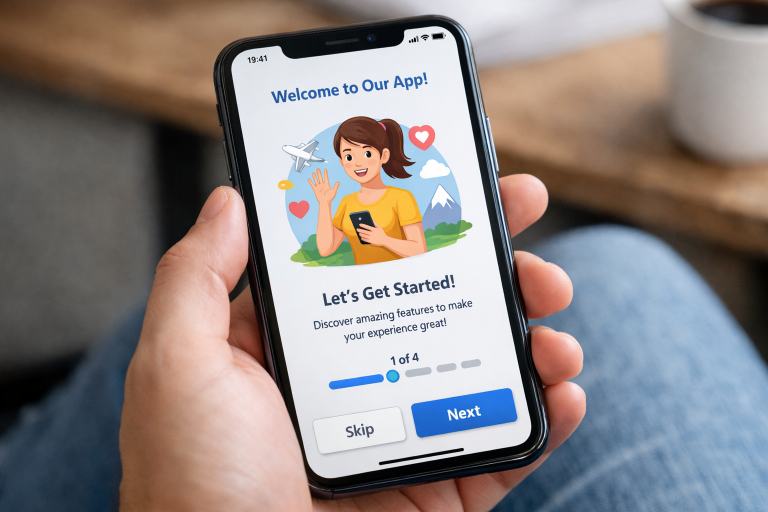
Types of Onboarding Flows
Different user groups benefit from different onboarding styles. Selecting the right approach, or a hybrid, can significantly improve your outcome, depending on your app’s use case and audience demographics.
- Benefits-Oriented Onboarding: This strategy communicates the app’s key value propositions to reassure and tempt new users, answering the “what’s in it for me?” question as soon as possible.
- Features-Oriented Onboarding: Here, the focus is on helping users navigate and understand the most important features, establishing comfort with the app’s core functionality.
- Action-Oriented Onboarding: Deploys prompts or tasks that encourage users to engage actively with the app from the start, like uploading a profile photo or completing the first checklist.
- Account Setup Onboarding: Guides users through registration or authentication, minimizing friction while ensuring users quickly arrive at meaningful app interactions.
- Interactive Onboarding: Uses gamified elements, quizzes, or tutorials to immerse users, making the process fun and memorable.
- Combination Approach: Integrates two or more of the above strategies for a richer, more comprehensive introduction to the app environment.
Personalization and User Preferences
Users differ significantly in how they want to learn about a new app. While some rely on step-by-step instructions, others prefer hands-on exploration. For instance, studies show that about 40% of users would rather figure things out independently rather than use guided walkthroughs. Offering both pathways, guided tours, and opt-out options can help accommodate this diversity within your user base. Hybrid onboarding models, which combine light guidance with opportunities for exploration, have proven particularly effective for apps that serve broad markets.
Implementing Progressive Disclosure
Introducing all app features simultaneously can overwhelm users, stifling engagement. Progressive disclosure, where information is revealed gradually as users progress, helps prevent cognitive overload. This approach allows users to master the basics before moving on to more advanced functionalities, leading to a smoother learning curve and a higher likelihood of ongoing engagement.
Utilizing No-Code Platforms for Onboarding
No-code platforms like OnboardFox are increasingly popular because they offer accessible solutions for designing, testing, and deploying onboarding flows. Without the need for complex engineering resources, product teams can quickly iterate on onboarding experiences in response to user feedback and analytics. Such flexibility is vital in fast-moving markets, where user behavior patterns can shift rapidly.
Continuous Testing and Optimization
The most successful onboarding flows evolve. Conducting regular A/B tests allows you to compare different layouts, copy, and interaction sequences. By analyzing user completion rates and subsequent engagement, you can identify winning approaches and apply data-driven improvements. Continuous optimization helps ensure your onboarding keeps pace with changing user expectations and competitive benchmarks.
Conclusion
Designing a high-impact onboarding flow means deeply understanding your users and their goals. By blending clear messaging, personalization, interactive elements, and an agile approach to refinement, your app can exceed user expectations right from the first encounter. With a commitment to user-centric onboarding, developers and product teams can set the stage for greater retention, satisfaction, and lasting business success.

How to Plan a Safer, Longer-Lasting Industrial Metal Fabrication Project in Lufkin, Texas

How to Keep Phoenix, Arizona Homes Pest-Ready During Monsoon Season
Floating Dock Contractors and the Basics of a Stable Dock System

How to Judge a Mountain Home Before You Buy in Aspen, Colorado

Building A Better Commercial Painting Plan From Prep To Completion

What Makes Legal Marketing Different From Marketing Almost Anything Else?

Why Bar Stools Can Completely Change the Feel of a Kitchen
Ways Proper Garage Door Installation Improves Performance

How to Compare Maine Neighborhoods Before Buying a Home in 2026

The Future of Home EV Charging: Trends, Benefits, and What Drivers Need to Know
Building A Better Commercial Painting Plan From Prep To Completion
How to Judge a Mountain Home Before You Buy in Aspen, Colorado
Floating Dock Contractors and the Basics of a Stable Dock System
How to Keep Phoenix, Arizona Homes Pest-Ready During Monsoon Season