
Technology
How Smart Dialing Technology is Transforming Customer Outreach Strategies

The Rise of Automated Dialing in Customer Communications
In today’s fast-paced business landscape, customer expectations continue to rise, and organizations must leverage new technologies to stay ahead of the competition. Automated dialing systems have emerged as a central pillar in outbound engagement efforts, fundamentally challenging and reshaping the traditional, manual approach that once dominated call centers and customer-service desks. No longer reliant solely on staff members dialing numbers one by one, companies in sectors ranging from finance and insurance to healthcare and retail now utilize advanced systems to achieve remarkable efficiencies in scale and accuracy. These systems make it possible to reach thousands of potential clients or customers daily, scheduling calls at times most likely to connect, thereby optimizing human resource allocation.
Central to this evolution is the rapid rise of AI for call centers. With predictive dialing, intelligent resource distribution, and time-optimized call placement capabilities, AI-infused platforms analyze vast datasets to prioritize leads and suggest the best following action. Integrated analytics and sophisticated machine learning engines help organizations reach people more efficiently and personalize touchpoints, building meaningful customer relationships. As a result, businesses can reduce operational costs, eliminate wasted effort in unsuccessful calls, and focus their teams on high-priority, value-driving activities.
What Makes Smart Dialing Technology Distinct?
Smart dialing technology marks a shift beyond basic automation. Unlike traditional autodialers that call from a list, AI-powered dialers analyze real-time data to optimize calling times, route calls to the best agents, and incorporate features like voice recognition, sentiment analysis, and outcome prediction. This allows agents to make better-timed, data-driven contacts likely to yield positive results. Smart dialers also enhance compliance by checking numbers against do-not-call lists and tracking consent, providing oversight that manual systems can’t match. Combining human expertise and technology improves customer satisfaction, agent morale, and resolution times, making these features essential for competitive advantage.
Key Advantages for Customer Outreach Teams
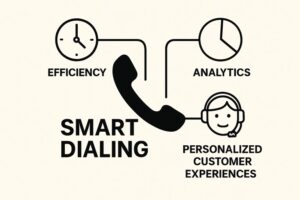
- Increased efficiency: Automated dialing helps eliminate repetitive manual tasks, freeing staff to concentrate on more strategic efforts such as nurturing high-potential leads and refining sales strategies.
- Personalized interactions: Advanced AI promotes deeper personalization by recommending specific scripts or offers suited to each customer’s unique needs, history, and behavior, enhancing engagement and loyalty.
- Compliance management: With ongoing updates from do-not-call registries and industry regulations, smart dialers provide dynamic compliance support that reduces risk and helps businesses maintain trust with customers and regulatory bodies.
- Detailed analytics: Supervisors and managers can access granular insights about call attempts, answer rates, conversation quality, customer feedback, and conversions, enabling constant adaptation and optimization of outreach strategies.
Integrating Data-Driven Outreach
Data-driven smart dialing enhances personalization and campaign success using demographic, engagement, and behavioral data to improve outreach timing, messaging, and contact prioritization. Teams can segment audiences precisely, tailoring campaigns based on purchase history, profitability, and response patterns. Retailers, for example, can target shoppers who abandoned carts with timely incentives. Organizations report up to 20% or more productivity gains, better response rates, and higher customer satisfaction from data-centric strategies. These benefits extend to small and midsized businesses using accessible, cloud-based solutions to make data-driven outreach affordable and effective.
Practical Applications Across Industries
The potential applications for smart dialing technology extend far beyond traditional telesales operations. In healthcare, advanced dialers can automate patient appointment reminders, post-discharge follow-ups, wellness checks, and prescription notifications, all of which contribute to improved patient adherence and experience. Within e-commerce and retail sectors, businesses use intelligent dialing to resolve support requests, such as delivery issues or billing corrections, while providing real-time upsell and cross-sell suggestions. Financial services have seen similar advantages, deploying smart dialers for everything from fraud alerts and overdue payment reminders to proactive outreach for new offers.
Evaluating Whether Smart Dialing is Right for Your Organization
- Pinpoint where current outreach processes stall, lag, or fail to meet desired targets—an honest assessment is crucial before making any changes.
- Ensure your compliance frameworks, CRM integrations, and data management tools are robust and regularly updated to support automated initiatives with minimal risk.
- Engage cross-departmental stakeholders, including IT, compliance, sales, and marketing, to guarantee buy-in and consistent alignment with core business objectives and customer promises.
- Roll out pilot programs, rigorously track defined success metrics such as contact rates and conversions, and use a feedback-driven approach to refine workflows and optimize technology deployment over time.
Adopting a data-centric evaluation process gives organizations a comprehensive view of potential benefits and pitfalls. It maximizes the value of smart dialing systems and enables businesses to adapt quickly in a competitive, ever-changing marketplace.
Looking Ahead: The Future of Customer Outreach
As industries worldwide continue digital transformations, smart dialing will play an increasingly pivotal role in customer relationship management strategies. Innovations on the horizon include deeper integration with conversational AI, which will empower companies to handle more complex queries without human intervention; advanced omnichannel engagement strategies that unify phone, email, text, and chat for a seamless customer journey; and adaptive routing algorithms that learn and respond to real-time changes in customer preferences or business needs. The organizations that adapt proactively to these advancements and emphasize continuous improvement in outreach will be best positioned to achieve sustained growth, stronger customer loyalty, and measurable market leadership.

How to Plan a Safer, Longer-Lasting Industrial Metal Fabrication Project in Lufkin, Texas

How to Keep Phoenix, Arizona Homes Pest-Ready During Monsoon Season
Floating Dock Contractors and the Basics of a Stable Dock System

How to Judge a Mountain Home Before You Buy in Aspen, Colorado

Building A Better Commercial Painting Plan From Prep To Completion

What Makes Legal Marketing Different From Marketing Almost Anything Else?

Why Bar Stools Can Completely Change the Feel of a Kitchen
Ways Proper Garage Door Installation Improves Performance

How to Compare Maine Neighborhoods Before Buying a Home in 2026

The Future of Home EV Charging: Trends, Benefits, and What Drivers Need to Know
Building A Better Commercial Painting Plan From Prep To Completion
How to Judge a Mountain Home Before You Buy in Aspen, Colorado
Floating Dock Contractors and the Basics of a Stable Dock System
How to Keep Phoenix, Arizona Homes Pest-Ready During Monsoon Season