
Career
How an EdD in Administration Prepares Educators for Transformative Leadership

Key Takeaways
- EdD programs connect theory to practice, enabling immediate application of leadership strategies.
- Visionary leadership helps anticipate challenges and drive innovation.
- Collaboration and team-building skills foster stakeholder engagement and support systemic change.
- Ethical and inclusive decision-making promotes equity and social justice.
- Executive competencies, including policy evaluation and organizational management, prepare leaders for high-level roles.
- Professional networks provide mentorship, career guidance, and access to best practices.
Introduction
In today’s rapidly evolving educational landscape, the need for transformative leaders who can shape the future of learning is more crucial than ever. More educators are seeking advanced credentials to distinguish themselves and lead meaningful reforms. Pursuing an online doctorate in leadership and management is emerging as a practical pathway for those determined to master both big-picture vision and hands-on administrative expertise. With academic and research-based advancements accelerating, transformational leadership in education requires comprehensive preparation and strategic insight.
Earning an EdD in Administration goes far beyond traditional instruction, arming education professionals with the confidence and capabilities to champion systemic innovation. These rigorous programs focus on interweaving leadership theory, ethical stewardship, and practical experience to form leaders prepared to enact enduring, positive change. Through specialized coursework and authentic fieldwork, future-oriented educators are empowered to guide organizations in navigating both challenges and opportunities.
Bridging Theory and Practice
The cornerstone of a quality EdD program is its emphasis on directly connecting educational theories to real-world scenarios—a focus highlighted in programs offered by St. Thomas University. Unlike the PhD—a degree typically reserved for those seeking a research-intensive path—EdD degrees strike a balance between academic foundations and applied leadership. For instance, the curriculum at Thomas Edison State University’s EdD in Organizational Leadership, Culture, and Change is intentionally designed to ensure participants can tackle day-to-day institutional hurdles while also preparing for evolving challenges in the educational sector.
Practical application comes to the forefront as candidates solve case studies, conduct action research, and implement change management initiatives in their own school systems or districts. This bridge between theory and action enables educators to rapidly transfer classroom insights into organizational improvements—fundamentally essential skills as policy, technology, and student needs transform the landscape of K-12 and higher education. The American Association of Colleges for Teacher Education highlights this integration as a best practice for aspiring educational leaders.
Developing Visionary Leadership Skills
Transformational change in education is fueled by leaders who combine analytical thinking with the courage to act on innovative ideas. EdD programs are carefully structured to help graduates hone the ability to critique current educational paradigms, anticipate emerging obstacles, and design solutions that promote continuous improvement. Participants are encouraged to create detailed strategic plans, engage in reflective inquiry, and refine their ability to communicate a compelling vision.
Degree concentrations exemplify this approach. By analyzing case studies and exploring data-driven decision making, cohort members develop the mentality and confidence to initiate reforms and inspire teachers, families, and communities. Crucially, these programs help educators transition from simply managing routine administrative tasks to seeing themselves as catalysts for lasting progress.
Enhancing Collaborative Abilities
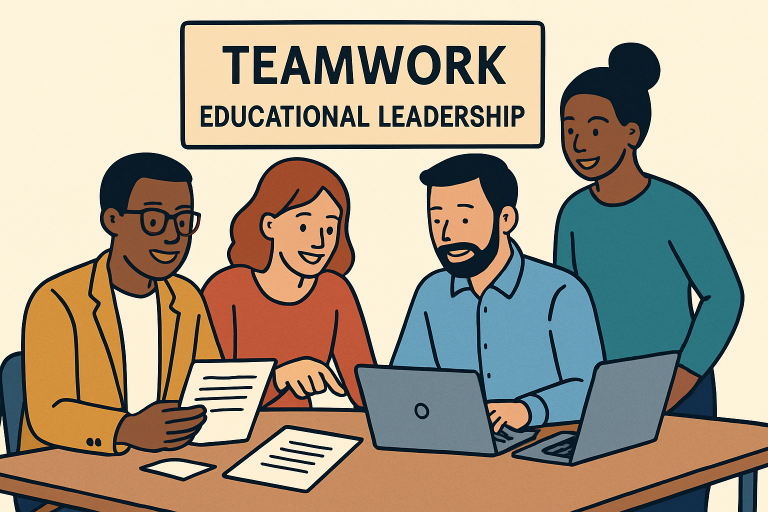
Transformation in education cannot occur in isolation. Successful EdD graduates learn to mobilize and influence teams—across departments, grade levels, and even entire districts. This is achieved through a curriculum that prioritizes group dynamics, conflict resolution, and effective communication. By building strong collaborative relationships and engaging a diverse set of stakeholders, educators are equipped to foster widespread buy-in for new policies and pedagogies.
These skills become especially valuable in inclusive educational settings, where cross-functional teams must collaborate to serve students from diverse backgrounds. According to Edutopia, fostering collaboration among educators and community partners can play a critical role in improving student outcomes and sustaining school reforms.
Fostering Inclusive and Ethical Leadership
Modern educational leaders must possess both the heart and the ethical acumen to champion diversity, equity, and inclusion. EdD programs dedicate significant attention to training candidates in ethical decision-making, equitable policy creation, and culturally responsive leadership. Coursework frequently includes legal studies, sociocultural analysis, and training in bias awareness, ensuring graduates are prepared to lead by example.
This focus enables future leaders to develop frameworks that support every student and staff member, regardless of their background or ability. Such preparation is essential in today’s schools, where the pursuit of social justice is inextricably linked to the broader mission of instructional excellence.
Building Executive-Level Competencies
To effectively scale change, educational leaders must be proficient in a variety of executive functions. EdD programs build these competencies—such as organizational development, budgeting, data analytics, and policy evaluation—through a blend of coursework and real-world practicum experiences. As a result, graduates are equipped to take on roles that require both a high-level vision and the tactical skills for organizational management.
These executive skills are vital for driving outcomes at scale, whether leading a school, district, or educational nonprofit organization. Continuous improvement initiatives, resource alignment, and evidence-based policy reforms all rely on strong administrative leadership.
Expanding Professional Networks
Building connections is another major benefit for EdD candidates. Programs typically offer access to experienced faculty, distinguished guest speakers, and alumni who provide career mentorship and practical guidance. These robust networks help open doors to collaboration, professional development, and leadership opportunities.
Ongoing engagement with other educational professionals ensures that graduates remain up-to-date with emerging best practices and cutting-edge research. For many educators, the relationships cultivated through an EdD program become a lifelong source of support and inspiration.
Final Thoughts
An EdD in Administration is far more than an academic achievement—it’s an investment in transformative leadership. By weaving together theoretical knowledge and practical application, developing visionary and collaborative skills, and upholding inclusive and ethical values, these programs prepare educators to create lasting, systemic change. As our schools and universities continue to adapt, the leaders who have navigated advanced EdD studies are uniquely positioned to guide the future of education with integrity, courage, and innovation.

How to Plan a Safer, Longer-Lasting Industrial Metal Fabrication Project in Lufkin, Texas

How to Keep Phoenix, Arizona Homes Pest-Ready During Monsoon Season
Floating Dock Contractors and the Basics of a Stable Dock System

How to Judge a Mountain Home Before You Buy in Aspen, Colorado

Building A Better Commercial Painting Plan From Prep To Completion

What Makes Legal Marketing Different From Marketing Almost Anything Else?

Why Bar Stools Can Completely Change the Feel of a Kitchen
Ways Proper Garage Door Installation Improves Performance

How to Compare Maine Neighborhoods Before Buying a Home in 2026

The Future of Home EV Charging: Trends, Benefits, and What Drivers Need to Know
Building A Better Commercial Painting Plan From Prep To Completion
How to Judge a Mountain Home Before You Buy in Aspen, Colorado
Floating Dock Contractors and the Basics of a Stable Dock System
How to Keep Phoenix, Arizona Homes Pest-Ready During Monsoon Season