
Technology
Are Intel MacBooks Still Worth Buying in 2026?

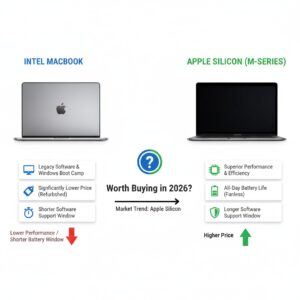
With Apple’s full transition to its own silicon now firmly established, Intel-based MacBooks occupy an unusual position in the market in 2026. Once the backbone of Apple’s laptop lineup, they are no longer sold new by Apple, yet they remain widely available through refurbished sellers and second-hand marketplaces. For buyers weighing up value, compatibility, and longevity, the question is no longer academic: does an Intel MacBook still make sense today?
At first glance, the appeal is obvious. Intel MacBooks are significantly cheaper than their Apple Silicon counterparts, especially on the refurbished market. For users on a tighter budget, this price difference can be tempting. Many models still look modern, feature high-quality displays, and offer solid build quality that rivals newer machines. In a world where MacBooks are often associated with premium pricing, Intel models appear to offer a shortcut into the ecosystem at a lower cost.
One of the strongest arguments in favour of Intel MacBooks is software compatibility. Certain professional tools, legacy applications, and specialised workflows were built specifically for Intel architecture. While Apple’s Rosetta translation layer has done an impressive job bridging the gap, not all software behaves perfectly on Apple Silicon. For users who rely on older plugins, niche enterprise tools, or specific virtualisation setups, Intel machines can still provide a smoother, more predictable experience.
Boot Camp support is another factor that continues to attract a subset of users. Intel MacBooks can natively run Windows alongside macOS, which is no longer possible on Apple Silicon machines. For engineers, IT professionals, or users who genuinely need Windows for work rather than convenience, this capability alone can justify choosing an Intel MacBook in 2026. Emulation and virtualisation options exist on Apple Silicon, but they are not direct replacements for native dual-boot functionality.
However, these advantages must be weighed against some increasingly clear drawbacks. Performance is the most obvious. Even high-end Intel MacBooks struggle to match the efficiency and sustained performance of entry-level Apple Silicon models. Under load, Intel machines run hotter, louder, and drain their batteries far more quickly. Tasks that feel effortless on an M-series Mac can cause Intel laptops to throttle or spin up their fans aggressively.
Battery life is another major differentiator. While Intel MacBooks were considered respectable in their time, they simply cannot compete with the all-day endurance that Apple Silicon now offers. In practical terms, this means more frequent charging, greater reliance on power outlets, and less flexibility for mobile work. For users who value portability and long sessions away from a desk, this is a significant disadvantage.
Longevity also deserves careful consideration. Apple continues to support Intel Macs with macOS updates, but the direction of travel is clear. New features increasingly favour Apple Silicon, and future versions of macOS are likely to push Intel hardware closer to the margins. Buying an Intel MacBook in 2026 almost certainly means accepting a shorter software support window compared to an Apple Silicon model purchased at the same time.
Thermal design and noise are often overlooked until they become daily annoyances. Intel MacBooks, particularly thinner models, can become uncomfortably warm during extended use. Fan noise, once tolerated as normal, feels jarring when compared to the near-silent operation of Apple Silicon machines. For anyone working in quiet environments or on audio-sensitive tasks, this difference is hard to ignore.
So who should still consider an Intel MacBook in 2026? The answer is narrow but valid. Users with specific legacy requirements, those needing native Windows support, or buyers seeking the lowest possible entry price into macOS may find Intel models acceptable. Refurbished units in excellent condition can still perform well for basic tasks and light professional use.
In 2026, Intel MacBooks are no longer the default choice. They are situational tools for specific needs, not future-proof all-rounders. Understanding those limitations is essential before deciding whether the lower price truly reflects better value.

How to Plan a Safer, Longer-Lasting Industrial Metal Fabrication Project in Lufkin, Texas

How to Keep Phoenix, Arizona Homes Pest-Ready During Monsoon Season
Floating Dock Contractors and the Basics of a Stable Dock System

How to Judge a Mountain Home Before You Buy in Aspen, Colorado

Building A Better Commercial Painting Plan From Prep To Completion

What Makes Legal Marketing Different From Marketing Almost Anything Else?

Why Bar Stools Can Completely Change the Feel of a Kitchen
Ways Proper Garage Door Installation Improves Performance

How to Compare Maine Neighborhoods Before Buying a Home in 2026

The Future of Home EV Charging: Trends, Benefits, and What Drivers Need to Know
Building A Better Commercial Painting Plan From Prep To Completion
How to Judge a Mountain Home Before You Buy in Aspen, Colorado
Floating Dock Contractors and the Basics of a Stable Dock System
How to Keep Phoenix, Arizona Homes Pest-Ready During Monsoon Season