
Technology
The Future of Home Electric Vehicle Charging: Trends, Benefits, and What to Expect

Key Takeaways
- Wireless charging pads are poised to streamline EV charging by eliminating physical plugs.
- Bidirectional charging enables EVs to function as both backup generators and participants in the energy grid.
- Intelligent charging with AI can lower electricity costs and prolong battery health.
- Pairing solar panels with home chargers enhances sustainability and reduces costs.
- Home EV charging has a significant impact on real estate desirability and pricing.
Table of Contents
- Wireless Charging Technology
- Bidirectional Charging and Vehicle-to-Grid (V2G) Integration
- Smart Charging with AI and Mobile Apps
- Integration of Renewable Energy
- Real Estate Value and Marketability
- Government Initiatives and Incentives
- Challenges and Considerations
- Conclusion
As electric vehicles (EVs) surge in popularity, homeowners are increasingly seeking solutions that provide efficient, cost-effective, and sustainable charging options right from their garages or driveways. These advancements are transforming the way we power our vehicles and our homes, changing both the experience and the expectations of EV ownership. Whether you’re a longtime enthusiast or considering your first electric car, understanding the latest charging innovations helps you stay ahead in this evolving landscape. For expert installation advice and to explore smart home charging solutions, visit https://gtconstruction.solar/ev-chargers/.
This article explores the most promising trends in home EV charging, highlighting key benefits and practical implications for the near future. By understanding these changes, you can maximize efficiency, lower energy costs, and enhance your home’s value—while driving sustainably.
Wireless Charging Technology
Wireless or inductive charging is set to become a disruptor in home EV charging. No more plugging in—install a charging pad on your garage floor, and park your car to initiate charging, using electromagnetic fields to transfer energy. This hands-free approach is a boost for convenience, especially in tight garages and multi-use spaces. As technology improves, major automakers are investing heavily in wireless-capable vehicles, forecasting a future where automation extends from driving to charging seamlessly.
Bidirectional Charging and Vehicle-to-Grid (V2G) Integration
The next leap in home charging turns your EV into a power asset, not just a consumer. Bidirectional charging technologies, such as Vehicle-to-Grid (V2G) and Vehicle-to-Home (V2H), allow you to send electricity back to your home or the power grid when needed. During outages, your car can serve as a backup power source. When demand spikes, it can support grid stability and even earn you credits from utilities in some regions. This integration is pivotal as smart grids and decentralized energy systems gain momentum, and is actively being supported by public and private infrastructure development across North America and Europe. For more on bidirectional charging and grid resiliency, see coverage by Forbes.
Smart Charging with AI and Mobile Apps
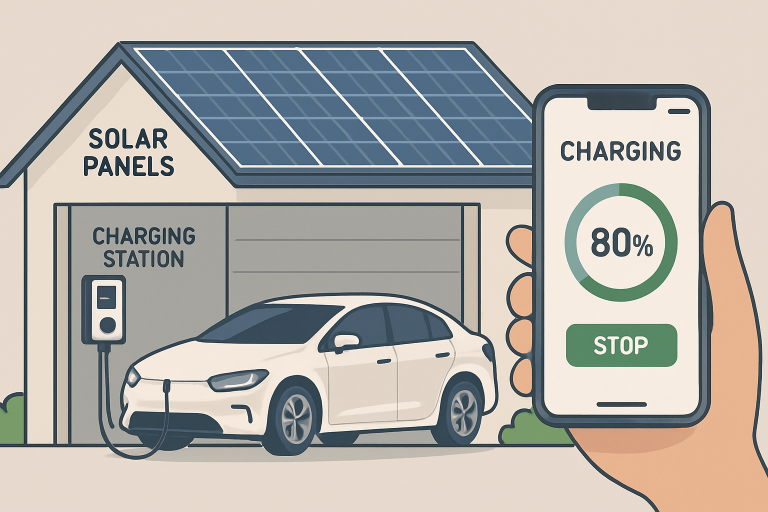
Today’s home charging isn’t just about plugging in and waiting. The newest generation of smart chargers leverages AI and IoT technologies to monitor energy usage, schedule charging sessions at optimal times (typically when electricity prices are lowest), and adapt to your driving habits. These systems also help balance local grid demand by avoiding peak hours, which can prolong battery life and drastically reduce costs over time. Mobile apps further empower users to track charging in real-time, receive maintenance updates, and adjust schedules with a simple tap. For insights into how smart-home integration is enhancing EV charging, refer to this Forbes article.
Integration of Renewable Energy
Pairing home EV chargers with rooftop solar is on the rise as savvy homeowners install solar arrays that can directly power their vehicles. This synergy not only reduces emissions but also lowers monthly electricity bills, thereby enhancing long-term sustainability and return on investment. Batteries can be added to store excess energy for use at night, making your home more energy independent and resilient against outages. As solar technology becomes more affordable, its integration with EV charging will only become more popular, reinforcing the trend toward greener, off-grid living.
Real Estate Value and Marketability
Homebuyers now expect sustainable amenities—and EV charging is quickly moving from luxury to necessity. According to industry research, EV charging is ranked among the fastest-growing home features for new home listings. Realtors and builders note that houses equipped with high-quality charging stations sell faster and often at a premium, reflecting broader social and economic shifts toward clean transportation.
Government Initiatives and Incentives
Federal and local governments are rolling out substantial grants and incentives for home and public EV charging infrastructure. The U.S. federal government’s recent $2.5 billion grant program aims to deploy half a million public chargers, with an emphasis on underserved areas. Incentive programs like these make it easier and more cost-effective for homeowners to invest in charging stations, while also accelerating the adoption of green energy nationwide. Further, many states are implementing their own additional incentives and rebates for at-home EV charger installations. For details on federal EV charger tax credits, see this Forbes Advisor article.
Challenges and Considerations
The road ahead is not without obstacles. Upfront costs for installation, especially for rapid charging units, remain high for some households. Moreover, electricity demand from home charging can strain local infrastructure, prompting utilities to urge for more innovative grid management and dynamic pricing. Flexible strategies, such as time-of-use rates, V2G integration, and continued investments in grid modernization, are recommended to address these challenges while ensuring reliable service for all.
Conclusion
The evolution of home electric vehicle charging is marked by innovation, sustainability, and enhanced user experience. With wireless charging pads, energy-sharing capabilities, and seamless integration with renewable energy sources, homeowners will enjoy greater convenience and resilience. As these advancements become more widespread, keeping informed ensures you can make the best choices for your home, vehicle, and budget.

How to Plan a Safer, Longer-Lasting Industrial Metal Fabrication Project in Lufkin, Texas

How to Keep Phoenix, Arizona Homes Pest-Ready During Monsoon Season
Floating Dock Contractors and the Basics of a Stable Dock System

How to Judge a Mountain Home Before You Buy in Aspen, Colorado

Building A Better Commercial Painting Plan From Prep To Completion

What Makes Legal Marketing Different From Marketing Almost Anything Else?

Why Bar Stools Can Completely Change the Feel of a Kitchen
Ways Proper Garage Door Installation Improves Performance

How to Compare Maine Neighborhoods Before Buying a Home in 2026

The Future of Home EV Charging: Trends, Benefits, and What Drivers Need to Know
Building A Better Commercial Painting Plan From Prep To Completion
How to Judge a Mountain Home Before You Buy in Aspen, Colorado
Floating Dock Contractors and the Basics of a Stable Dock System
How to Keep Phoenix, Arizona Homes Pest-Ready During Monsoon Season