
Home Decor
How Office Design Impacts Productivity

Key Takeaways
- Office design directly influences employee productivity and satisfaction.
- Incorporating natural elements and flexible layouts can boost performance.
- Addressing noise levels and providing adequate lighting are crucial for a productive workspace.
Creating a workspace that maximizes productivity involves more than just furnishing a room or adding artwork. Successful office environments consider employees’ psychological and functional needs, linking design choices to measurable impacts on morale and efficiency. For businesses seeking to elevate their teams’ performance, an inspiring workspace can be transformative. If you are considering new construction or renovations, office building construction in Boise, ID can help you realize a space that aligns with modern productivity principles.
Effective office design is not just about appearances. It is about intentional enhancements that boost job satisfaction, foster collaboration, and support various work styles. Flexible layouts, smart lighting, and the thoughtful incorporation of natural elements all play a vital role in shaping a healthier, more energized workforce.
As companies compete for talent and look for ways to retain top employees, office design emerges as a critical factor in keeping teams motivated and engaged. Even subtle changes can spark significant improvements in daily performance. Leaders and facility managers who recognize this connection are increasingly investing in strategic upgrades to drive business results.
Introduction
The way an office is designed sets the tone for an organization’s culture and directly affects how well people work. An intentional layout supported by research-backed strategies prioritizes comfort, flexibility, and wellness, all of which contribute to improved job performance. Modern workspaces go beyond simple functionality, fostering a sense of belonging and collaboration among employees. Organizations that invest in thoughtful design reap benefits like increased innovation, stronger engagement, and better team morale.
Incorporating Natural Elements
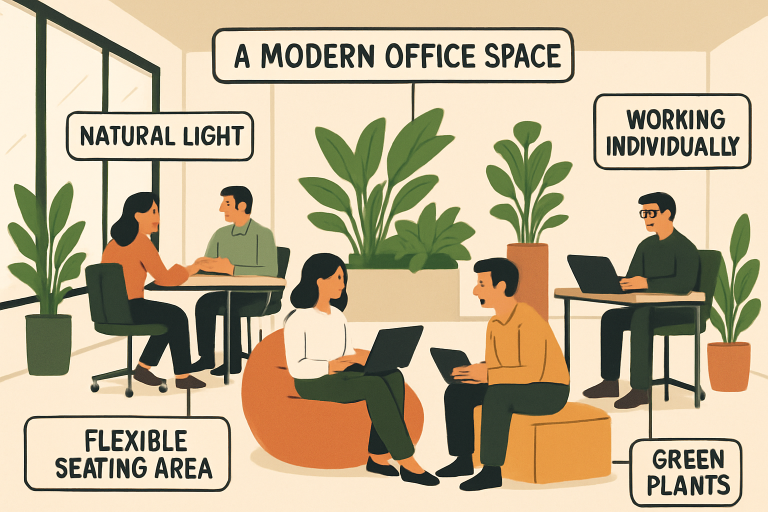
Bringing nature indoors creates a calming environment that can reduce anxiety and enhance concentration. Office spaces featuring potted plants, living walls, or access to scenic views are shown to positively influence mood and well-being. Key research has found that biophilic design elements, such as wood, stone, and greenery, help decrease mental fatigue and foster an energizing atmosphere. According to a study featured in Time, companies that introduce live greenery in the office saw a 15% increase in worker productivity and higher satisfaction with air quality.
Flexible Layouts for Diverse Work Styles
No two employees work the same way. Open, adaptable layouts that accommodate solo focus work, team brainstorming, casual lounges, and quiet pods offer autonomy and variety. When people are empowered to choose their setting based on the task, job performance improves. Flexible zones allow collaboration when needed, while also supporting solo deep work for tasks that demand concentration. For example, organizations that provide moveable partitions, hot-desking options, and dedicated quiet rooms report better teamwork and job satisfaction. More companies are recognizing these benefits and shifting away from rigid, one-size-fits-all configurations.
Managing Noise Levels
Noise pollution is a leading complaint in open-plan workplaces, often leading to reduced output and heightened stress. Simple solutions include installing carpeting, sound-absorbing ceiling panels, and acoustic dividers to contain distractions. White noise machines or music in common spaces can also help mask disruptive sounds. Specific quiet zones and enclosed meeting rooms are essential for providing employees with space to focus or conduct private conversations. An effective noise management strategy can significantly reduce errors and improve staff focus.
The Importance of Lighting
Lighting is a major contributor to mood, motivation, and eye health. Maximizing exposure to natural light, whether through large windows, skylights, or glass partitions, supports healthy circadian rhythms and lifts overall office energy. In spaces with limited natural light, adjustable LED fixtures that mimic daylight can reduce headaches and fatigue while maintaining a visually comfortable environment. A New York Times article highlights how adequate light levels lead to better sleep quality and, by extension, higher productivity at work.
Utilizing Color Psychology
Thoughtfully chosen colors can reinforce your company’s identity and influence employee behavior in subtle but powerful ways. For instance, blue hues promote calm and sustained focus, making them ideal for high-stress spaces. Green shades have been linked with creativity and restoration, while yellow accents can spark optimism and innovation. Understanding color psychology empowers leaders to create a workspace aligned with desired outcomes, whether increased collaboration, creativity, or focus. Using color strategically in décor, furnishings, and wall accents can set the right tone for every team.
Incorporating Employee Feedback
The most effective workspace enhancements result from actively involving employees in the design process. Regular surveys, listening sessions, and focus groups help identify pain points and preferences, allowing companies to tailor solutions to real needs. When employees feel heard, they are more likely to engage with new policies and spaces, resulting in higher satisfaction and commitment. Continually gathering feedback ensures the office evolves in response to shifting work styles, technologies, and workforce demographics.
Final Thoughts
Successful office design requires an ongoing commitment to both aesthetics and function. By prioritizing natural elements, flexible layouts, sound and lighting quality, and integrating employee feedback, organizations can create workplaces where people are motivated to do their best. The payout is not just visible in decor but is realized in measurable improvements in productivity and overall workforce satisfaction. Companies looking to thrive in a competitive environment can give themselves an edge by investing in spaces that truly work for the people who use them every day.

Building A Better Commercial Painting Plan From Prep To Completion

What Makes Legal Marketing Different From Marketing Almost Anything Else?

Why Bar Stools Can Completely Change the Feel of a Kitchen
Ways Proper Garage Door Installation Improves Performance

How to Compare Maine Neighborhoods Before Buying a Home in 2026

The Future of Home EV Charging: Trends, Benefits, and What Drivers Need to Know

How Septic Tank Pumping Services in Huntsville AL Protect Soil Absorption Systems

Foundation Crack Repair Using Injection Methods

How do you know when you need to change your primary care doctor
The Importance of Accurate Inventories Before Moving Day
Ways Proper Garage Door Installation Improves Performance
What Makes Legal Marketing Different From Marketing Almost Anything Else?
Why Bar Stools Can Completely Change the Feel of a Kitchen