
Technology
Enhancing Software Development with AI-Powered Collaboration

Table of Contents
- Enhancing Developer Productivity
- Improving Code Quality
- Accelerating Project Timelines
- Facilitating Application Modernization
- Ensuring Security and Compliance
- Fostering Innovation
- Challenges and Considerations
- Final Thoughts
Artificial Intelligence (AI) is rapidly transforming how software development teams collaborate and drive innovation. As adoption spreads, AI-driven tools streamline workflows, automate repetitive tasks, and help developers focus on higher-level problem-solving. With the support of AI custom software development partners, companies are leveraging these advances to boost productivity, deliver high-quality code, and meet project goals more efficiently than ever before.
For development organizations, the integration of AI marks a shift from labor-intensive coding to a more strategic, outcome-oriented process. Modern teams use AI-powered environments that assist with code generation, automate review processes, and even support code debugging. This allows seasoned engineers to dedicate their expertise to architecting better systems and tackling complex, creative challenges instead of manual, repetitive work.
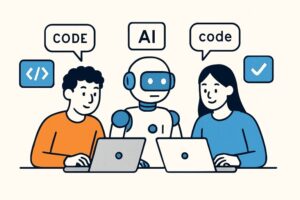
With these upgrades, the way teams interact is changing. Developers are increasingly collaborating not just with their human peers, but also with intelligent systems that understand project context and provide proactive recommendations. The shift to AI-augmented development environments is also accelerating transition efforts for enterprises modernizing old systems or frameworks.
As the pace of software innovation accelerates, the impact of AI-powered tools becomes vital for maintaining a competitive edge. Teams that leverage AI for everything from project planning to vulnerability detection can reduce project timelines and keep code bases more robust and secure. In this environment, aligning with forward-thinking technology and software industry leaders is essential for future success.
Enhancing Developer Productivity
AI-powered development environments are now fundamental to developer productivity. For example, Nvidia has deployed AI-assisted programming tools across its engineering teams, leading to a threefold increase in the productivity of its codebase. Over 30,000 company engineers have adopted a specialized version of Cursor, an AI-enhanced Integrated Development Environment (IDE) that automates many coding tasks, including writing code, code reviews, and debugging. The use of these AI tools lets experienced developers prioritize innovation and architecture design while maintaining steady, manageable bug rates, resulting in a more prolific engineering operation.
Improving Code Quality
Maintaining rigorous code standards is easier thanks to AI-driven auto-review tools. Platforms like Qodo (formerly Codium) embed themselves directly into code editors and Git workflows to provide real-time, context-aware reviews. This integration reduces the likelihood of bugs and helps developers learn best practices over time. Early error detection is key to strict quality assurance and long-term maintainability, especially in fast-evolving projects.
Accelerating Project Timelines
AI’s automation capabilities push project timelines forward by freeing up valuable developer hours. Tools like Red Hat’s Developer Lightspeed offer context-sensitive support for test plan creation, documentation, and troubleshooting across development cycles. Trial runs within organizations have demonstrated measurable reductions in time spent on repetitive, manual tasks, enabling teams to focus on critical project details and high-level business objectives. As software delivery cycles tighten, the ability to automate and accelerate is a clear competitive differentiator.
Facilitating Application Modernization
Legacy software poses a major challenge for organizations seeking to migrate to cloud-native environments or adopt modern frameworks. AI-powered solutions automate much of the tedious work involved in code refactoring and migration. These tools offer intelligent recommendations and automated code adjustments that directly integrate with popular IDEs. Over time, the system improves based on feedback and completed migrations, further reducing errors and accelerating application modernization.
Ensuring Security and Compliance
With more code comes greater responsibility for security and regulatory compliance. AI takes a proactive role by scanning for vulnerabilities, analyzing security issues, and even proposing fixes. OpenAI’s Codex Security is a notable example, functioning as an autonomous security agent that autonomously identifies, validates, and remediates threats. Its rapid response capability fortifies ongoing application development efforts and creates a safer, more compliant software environment.
Fostering Innovation
Perhaps the most exciting impact of AI is its role in fostering innovation. By leveraging techniques like reinforcement learning, AI is driving algorithmic optimization. Google DeepMind’s AlphaDev system, for instance, has discovered more efficient sorting algorithms that have since been integrated into the C++ Standard Library. The improvements range from a 70 percent speed increase for short sequences to a notable 1.7 percent boost for longer sequences, showing that AI can push the boundaries of traditional software engineering and fuel the next wave of tech advancements.
Challenges and Considerations
Despite these advantages, integrating AI into software development is not without its obstacles. Reliability is paramount: AI-generated code must be thoroughly validated to avoid introducing defects or vulnerabilities. Developer training is another concern, as effective collaboration between humans and AI tools requires new workflows and skills. Finally, ethical issues, such as mitigating bias in AI algorithms, demand attention from both developers and leaders to ensure fairness and accountability across all applications.
Final Thoughts
The collaboration between AI and software developers is reshaping digital innovation by driving productivity, code quality, modernization, and security. As AI technologies rapidly evolve and embed themselves deeper into software lifecycles, forward-thinking organizations will maximize these opportunities and tackle challenges head-on. Ultimately, teams that embrace AI’s full potential will lead the way in delivering impactful, high-quality software solutions for a rapidly transforming world.

How to Plan a Safer, Longer-Lasting Industrial Metal Fabrication Project in Lufkin, Texas

How to Keep Phoenix, Arizona Homes Pest-Ready During Monsoon Season
Floating Dock Contractors and the Basics of a Stable Dock System

How to Judge a Mountain Home Before You Buy in Aspen, Colorado

Building A Better Commercial Painting Plan From Prep To Completion

What Makes Legal Marketing Different From Marketing Almost Anything Else?

Why Bar Stools Can Completely Change the Feel of a Kitchen
Ways Proper Garage Door Installation Improves Performance

How to Compare Maine Neighborhoods Before Buying a Home in 2026

The Future of Home EV Charging: Trends, Benefits, and What Drivers Need to Know
Building A Better Commercial Painting Plan From Prep To Completion
How to Judge a Mountain Home Before You Buy in Aspen, Colorado
Floating Dock Contractors and the Basics of a Stable Dock System
How to Keep Phoenix, Arizona Homes Pest-Ready During Monsoon Season