
Personal Injury Law
Common Challenges People Face After Personal Injury

Key Takeaways
- Proving negligence is often the most difficult step in personal injury cases.
- Insurance companies may offer low settlements to minimize payouts.
- Future medical expenses are easily overlooked and underestimated.
- Emotional stress can compromise decision-making during the claims process.
- Adhering to legal deadlines is essential to maintain the right to compensation.
For many individuals, the aftermath of a personal injury is filled with uncertainty and unique hurdles that go well beyond the immediate physical pain. Whether stemming from a car accident, workplace incident, or another unfortunate event, the journey to recovery and justice can feel overwhelming. Knowing what to expect during this time and understanding each critical challenge can dramatically improve one’s ability to seek fair compensation and restore stability. At Ahlander Injury Law, injured individuals find guidance for overcoming these difficulties at every stage of the process.
From interacting with insurance adjusters to calculating the long-term impacts of a challenging process, every step counts. Victims frequently encounter pushback from the responsible party or their insurers, and both legal and personal complications can build up quickly. Having access to comprehensive and actionable information helps ensure that victims are not blindsided by systems that often appear to work against them.
Proving Negligence
The cornerstone of any personal injury claim lies in demonstrating that someone else’s carelessness directly caused your harm. Establishing this liability involves gathering extensive evidence, including photographs, surveillance footage, eyewitness accounts, and medical reports. The process can be daunting when parties dispute responsibility or when crucial evidence is missing. Injuries with invisible symptoms, for example, soft-tissue injuries or psychological trauma, can be even tougher to prove. Given these complexities, victims often benefit from working with legal professionals who know how to collect and present compelling evidence. More details about collecting evidence can be found at Nolo, a trusted legal resource.
Dealing with Insurance Companies
Insurance companies are not always motivated to give injured people a fair deal. Adjusters may use tactics to minimize payouts, such as offering quick settlements for less than the claim is worth or questioning the extent of the injuries. The negotiation process can drag on, especially when medical costs are ongoing or the full impact of injuries is not yet clear. Victims should never feel pressured to accept an initial offer and should request clear justification for any settlement proposal. Guidance from experienced attorneys can often make the difference between a low payout and adequate compensation.
Underestimating Future Medical Costs
Medical bills do not stop with the emergency room visit. Many injuries require ongoing treatment, rehabilitation, or assistive devices, which can be costly over time. Failing to plan for future care needs is a common yet grave mistake. The financial impact may become overwhelming if settlement money runs out before recovery is complete. Including future doctors’ appointments, surgeries, physical therapy, and even mental health care in the claim is vital for proper financial stability. More information on calculating these costs can be found in this WebMD guide on rehabilitation and long-term care.
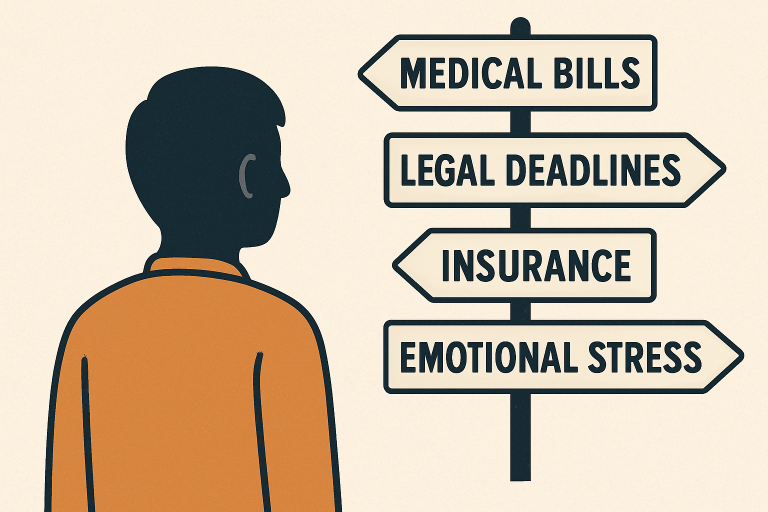
Emotional and Psychological Stress
Beyond the apparent physical injury, many victims experience anxiety, depression, or other forms of emotional trauma. Severe cases may result in post-traumatic stress disorder (PTSD), interfering with work, relationships, and the everyday joys of life. These psychological effects often make it difficult to focus on paperwork, negotiation, or even following medical instructions. Family and support systems become critical during this time, as does access to counseling or therapy services. Speaking openly about emotional challenges is recommended, as these issues are just as real as physical injuries and sometimes take even longer to heal.
Statute of Limitations
Every state enforces deadlines, known as statutes of limitations, for filing personal injury claims. Missing these deadlines can permanently eliminate the chance to recover damages. Understanding the relevant laws and tracking essential dates from the moment of injury is critical. These deadlines may differ depending on the nature of the incident and the victim’s age, so timely consultation with legal counsel is advised. Acting promptly preserves rights and prevents missing out on potential compensation due to administrative error or delay.
Financial Struggles
Lost income and mounting medical bills are a harsh reality for many injury victims. Time away from work, ongoing treatment, and other expenses can strain even the healthiest savings. In some cases, families find themselves struggling with rent, utilities, or basic needs after a serious accident. Exploring all sources of compensation, including insurance policies, government programs, and civil lawsuits, helps mitigate these hardships and provides a stronger financial foundation throughout the recovery process.
Legal Complexities
Navigating the maze of procedural requirements and paperwork requires precision. Mistakes in documentation, missed deadlines, or incomplete forms can jeopardize an otherwise valid claim. Many victims underestimate the intricacies involved in bringing a personal injury case to a successful conclusion. Consulting someone with experience in this field not only increases the likelihood of a positive outcome but can also provide peace of mind during an otherwise turbulent period.
Conclusion
Recovering after a personal injury is much more involved than simple physical healing. Understanding and addressing the legal, financial, and emotional challenges makes it easier to find a path forward. With guidance and support, such as that offered by professionals at Ahlander Injury Law, individuals are empowered to navigate each obstacle with greater confidence and clarity, ultimately working toward recovery and rightful compensation.

How to Plan a Safer, Longer-Lasting Industrial Metal Fabrication Project in Lufkin, Texas

How to Keep Phoenix, Arizona Homes Pest-Ready During Monsoon Season
Floating Dock Contractors and the Basics of a Stable Dock System

How to Judge a Mountain Home Before You Buy in Aspen, Colorado

Building A Better Commercial Painting Plan From Prep To Completion

What Makes Legal Marketing Different From Marketing Almost Anything Else?

Why Bar Stools Can Completely Change the Feel of a Kitchen
Ways Proper Garage Door Installation Improves Performance

How to Compare Maine Neighborhoods Before Buying a Home in 2026

The Future of Home EV Charging: Trends, Benefits, and What Drivers Need to Know
Building A Better Commercial Painting Plan From Prep To Completion
How to Judge a Mountain Home Before You Buy in Aspen, Colorado
Floating Dock Contractors and the Basics of a Stable Dock System
How to Keep Phoenix, Arizona Homes Pest-Ready During Monsoon Season