
Dental
A Fresh Look at Full-Mouth Dental Implants: Benefits, Myths, and Patient Experiences

Table of Contents
- Benefits of Full-Mouth Dental Implants
- Debunking Common Myths
- Patient Experiences
- Considerations Before Proceeding
- Final Thoughts
For individuals facing extensive tooth loss, full-mouth dental implants offer more than just a renewed smile—they provide a foundation for restored confidence, functionality, and improved oral health. Far surpassing traditional solutions like dentures, this innovative procedure can dramatically transform quality of life, turning daily challenges into manageable moments and restoring a sense of wholeness. Patients interested in a long-lasting, comfortable solution to tooth loss often turn to highly specialized centers such as the dental implant center Flowood, MS, where advanced expertise and cutting-edge technology merge to deliver optimal outcomes and patient satisfaction.
Discovering whether this comprehensive dental solution is right for you means understanding both the substantial advantages and the nuanced realities behind it. In this article, we explore the benefits, address persistent myths that can cause hesitation, and amplify the voices of real patients who have experienced the transformation firsthand. Anyone considering this investment should arm themselves with reliable information—and choose their surgical team with care, knowing that their choice will impact their health, comfort, and self-esteem for many years to come.
Benefits of Full-Mouth Dental Implants
Full-mouth dental implants have rapidly become the preferred option for extensive tooth replacement, delivering comprehensive and predictable outcomes that far exceed those of traditional dentures or bridges. Their benefits set them apart not only from conventional removable dentures but also from other restorative approaches that struggle to replicate natural form and function. Patients commonly experience an enhanced bite force, enabling them to enjoy a broader range of foods—such as crunchy fruits, chewy meats, and fresh vegetables—without anxiety or discomfort. Maintaining proper nutrition is a critical component of whole-body health, and dental implants help make this possible once again.
Another significant advantage is the preservation of jawbone integrity, an often-overlooked yet crucial aspect of oral health. Tooth loss often leads to a process called bone resorption, where the jawbone gradually shrinks due to a lack of stimulation. Dental implants function much like natural tooth roots, stimulating and maintaining bone tissue each time you bite or chew. This biocompatibility not only sustains facial contours—helping patients avoid a prematurely aged or sunken facial appearance—but also supports a stable environment for neighboring teeth and oral structures. In contrast, traditional dentures sit atop the gums and can actually accelerate bone loss over time due to the pressure they exert without stimulating the underlying bone.
Comfort and natural aesthetics are also hallmarks of full-mouth implants. Unlike removable dentures, which may slip at inconvenient moments, cause sore spots, or impede clear speech, implants are firmly anchored into the jawbone and function nearly indistinguishably from real teeth. Modern materials and design allow dental professionals to craft implant-supported prosthetics that blend seamlessly in color, shape, and feel with your natural teeth, supporting a confident, radiant smile. With good oral hygiene, regular dental checkups, and minor maintenance over the years, full-mouth implants can last for decades—sometimes even a lifetime—making them a smart long-term investment that often pays for itself in security and peace of mind.
Debunking Common Myths
Myth: Implant Surgery Is Painful
The notion that implant surgery is unbearably painful is outdated and inaccurate in modern dental care. Today’s dental professionals utilize advanced imaging, precision-guided surgery, and a variety of effective anesthesia options to minimize discomfort both during and after the procedure. In most cases, patients describe the process as far less daunting than anticipated, comparing post-operative soreness to that following a routine dental extraction. Thanks to improved protocols and rapid recovery times, most patients can resume their regular activities within a few days and find that any mild pain can be managed well with over-the-counter medications or prescribed pain relievers.
Myth: Implants Are Merely Cosmetic
Although the aesthetic benefits of full-mouth dental implants are indeed substantial—restoring a bright, natural-looking smile and bolstering self-confidence—the true impact of the procedure extends far beyond appearance. Dental implants play a vital role in preserving jaw health, preventing progressive bone loss, and maintaining the overall structure and alignment of the mouth. They stabilize neighboring teeth and reduce the likelihood of additional dental problems related to shifting teeth or bite changes, which can sometimes occur with missing teeth or traditional dentures. In this sense, implants offer substantial functional and medical benefits in addition to cosmetic improvements.
Myth: Implants Demand Excessive Upkeep
Another common misconception is that implants require special maintenance routines that are time-consuming or complicated. In reality, once the healing and integration process is complete, caring for dental implants is straightforward: daily brushing and flossing, plus regular dental check-ups, are generally all that is required—much like with natural teeth. There’s no need for adhesive creams or nighttime soaking involved with removable dentures. With attention to oral hygiene and professional cleanings, implants can help patients enjoy a healthy, attractive smile for decades, with minimal hassle or interruption to everyday life.
Patient Experiences
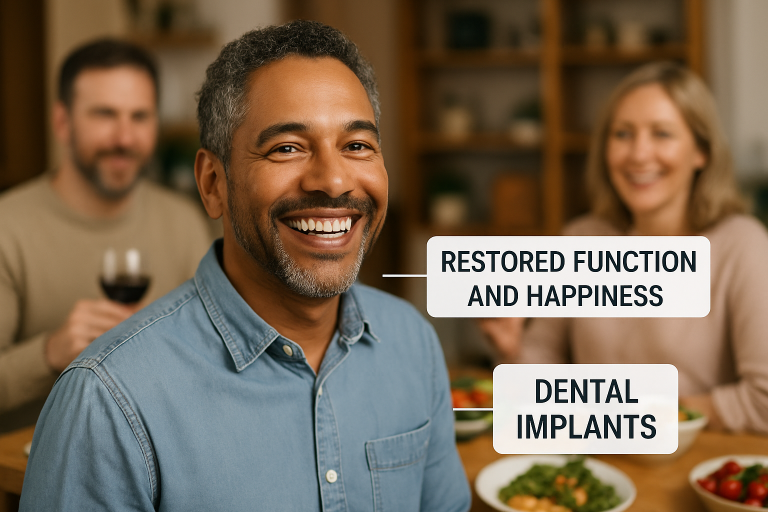
The real-world benefits of full-mouth dental implants come alive in patients’ own words and experiences. Individuals frequently recount not only regaining their ability to eat their favorite foods comfortably, but also feeling empowered and more outgoing around family, friends, and colleagues. The freedom to enjoy hearty meals, smile broadly in photos, or speak with clarity has ripple effects that touch every aspect of daily life. These life-changing impacts extend beyond physical health, positively influencing emotional well-being, mental health, and social connections—elements that are especially important for those who previously dealt with the embarrassment or discomfort caused by dentures or missing teeth.
“I can eat my favorite foods again without worry, and my confidence has skyrocketed. It’s truly life-changing.” – A satisfied implant recipient
Testimonies like these echo across restorative dental practices, consistently highlighting the profound difference implants can make for patients who once felt limited by dentures or years of missing teeth. Reports of improved nutrition, effortless speech, and the emotional joy of laughing, eating, and participating in social events without complication are among the most common themes. Many patients say the decision to pursue full-mouth dental implants was one of the best investments they’ve ever made in their long-term health and happiness.
Considerations Before Proceeding
- Comprehensive Evaluation: Not every patient is an immediate candidate for full-mouth dental implants. Dental professionals will assess factors like bone density, existing oral or general health issues, and lifestyle habits to ensure the procedure is both safe and effective. Sometimes additional preparatory procedures, such as bone grafts or sinus lifts, may be needed.
- Potential Risks: While implant placement is considered a safe and predictable procedure for most, every surgical venture comes with some risk. These risks might include infection, implant failure (particularly in patients who smoke or have certain medical conditions), and rare complications like nerve or sinus involvement. Having a transparent, thorough conversation with your dental team about risks and realistic expectations is essential for optimal results.
- Financial Investment: Implant procedures require a significant initial investment, often reflected in the skill, technology, and materials involved. The cost varies depending on factors such as case complexity, choice of materials, clinical experience, and geographic location. However, when factoring in the durability and longevity of implants—along with the well-being and confidence they provide—many patients find that the long-term value far exceeds the periodic replacement costs associated with traditional dentures or bridges. Many dental practices offer flexible payment plans, financing, or phased treatment options to help make dental implants more accessible and manageable.
Conclusion
Full-mouth dental implants represent a remarkable evolution in restorative dentistry, offering a reliable, functional, and aesthetically pleasing solution for those facing extensive tooth loss. By providing decades—sometimes a lifetime—of secure oral health and self-assurance, they are a compelling choice for those seeking lasting results. For patients ready to explore this transformative path, partnering with a trusted, experienced dental professional is the crucial first step toward regaining both health and happiness. The future of your smile—and, by extension, your quality of life—starts with informed choices and expert care.

Building A Better Commercial Painting Plan From Prep To Completion

What Makes Legal Marketing Different From Marketing Almost Anything Else?

Why Bar Stools Can Completely Change the Feel of a Kitchen
Ways Proper Garage Door Installation Improves Performance

How to Compare Maine Neighborhoods Before Buying a Home in 2026

The Future of Home EV Charging: Trends, Benefits, and What Drivers Need to Know

How Septic Tank Pumping Services in Huntsville AL Protect Soil Absorption Systems

Foundation Crack Repair Using Injection Methods

How do you know when you need to change your primary care doctor
The Importance of Accurate Inventories Before Moving Day
Ways Proper Garage Door Installation Improves Performance
What Makes Legal Marketing Different From Marketing Almost Anything Else?
Why Bar Stools Can Completely Change the Feel of a Kitchen