
Business
How Business Owners Can Apply for Credit Without Using a Social Security Number

Key Takeaways
- Business credit can be secured without an SSN, using an EIN or ITIN.
- An EIN is an IRS-issued identifier for businesses and helps separate business and personal finances.
- Some lenders and issuers will allow credit applications using an ITIN or other alternatives, especially for international applicants.
- Building a strong business credit profile is essential for eligibility without personal guarantees.
Entrepreneurs should understand that obtaining and using an EIN or ITIN is only one part of the equation; building a robust business credit history and understanding lender criteria are equally essential. For those interested in a broader look at how business credit works, NerdWallet’s guide on building business credit provides extra context.
Securing credit is critical for small business owners aiming for growth. Yet, there are often concerns about privacy, identity protection, or eligibility, particularly when it comes to providing a Social Security Number (SSN). Many business owners never realize that they can apply for credit using other legally recognized identifiers. One option is a business credit card EIN only, which makes it more feasible for entrepreneurs to maintain separation between their personal and business finances.
This path is especially important for non-U.S. citizens or those who do not wish to risk their personal information. Many lenders, banks, and credit card issuers have updated their policies, making it increasingly practical for business owners to leverage alternative forms of identification, such as Employer Identification Numbers (EINs) or Individual Taxpayer Identification Numbers (ITINs).
Understanding the Role of an EIN
An Employer Identification Number (EIN) serves as a business’s federal tax identification number, similar in structure to an SSN but meant exclusively for business purposes. The Internal Revenue Service issues the EIN and is commonly used to open business bank accounts, file tax returns on behalf of the business, and apply for lines of credit. By acquiring an EIN, you are formally establishing your business’s identity with the federal government, which also lays the groundwork for building business credit.
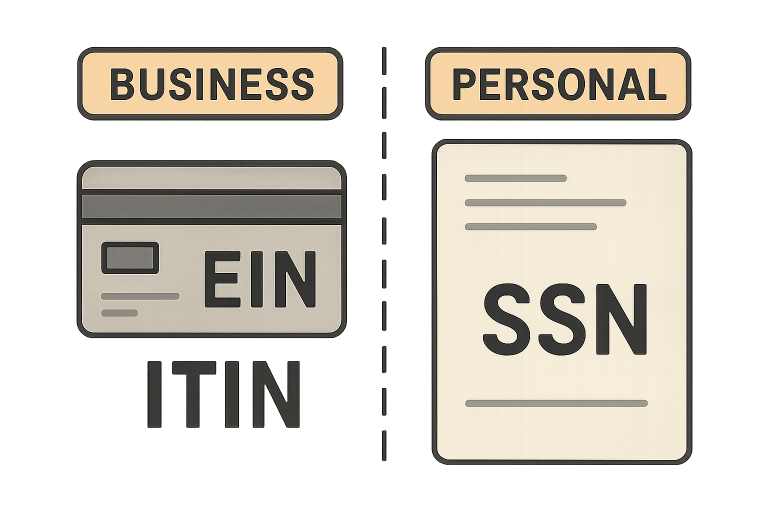
This separation is crucial. Not only does it help shield your personal identity and credit, but it also sets your company on a path to legitimacy and long-term growth. Most traditional banks require an EIN to process business loan or credit card applications because it demonstrates the business’s structure and legitimacy.
Obtaining an ITIN as an Alternative
There are instances where neither an SSN nor immediate U.S. citizenship is available, especially for international entrepreneurs. In such cases, the IRS provides an Individual Taxpayer Identification Number (ITIN). The ITIN is a nine-digit tax processing number issued to individuals who are not eligible for an SSN but still need to comply with U.S. tax laws.
To obtain an ITIN, you must complete IRS Form W-7 and submit the required supporting documentation. Once issued, your ITIN can act as a valid alternative for several financial purposes, including some business credit applications. Always verify with prospective lenders that they accept ITINs, as requirements can vary.
Applying for Business Credit with an EIN or ITIN
Once you obtain your EIN or ITIN, you can begin applying for business credit. Specific lenders and credit card companies have updated their application processes to support EIN or ITIN use. For example, some popular business credit cards now accept applications that do not require an SSN if you have a valid business entity and accompanying EIN or ITIN. In some cases, passports or other country-issued IDs may also be requested for verification.
Before applying, thoroughly research applicable lenders. Directly contacting issuers or reviewing their publicly posted policies can help you identify which companies accept EIN-or ITIN-only applications. For more details on business lending requirements, check out NerdWallet’s overview of small business loan documentation.
Building a Strong Business Credit Profile
Succeeding with non-SSN applications depends heavily on the strength of your business credit profile. Consider these foundational steps:
- Open a Business Bank Account: Use your new EIN to set up a dedicated business checking account, which helps keep finances separate and establishes your business’s financial history.
- Register with Business Credit Bureaus: Register your business with Dun & Bradstreet, Experian Business, and Equifax Business. This ensures your business credit activity is reported and tracked.
- Establish Trade Lines: Build relationships with vendors and suppliers who report trade credit to these business bureaus. On-time payments will reflect well on your credit file.
- Maintain Timely Payments: Consistently pay all your business obligations, including loans, leases, and utility bills, on or before their due dates to create a pattern of reliability.
Exploring Alternative Financing Options
If you are having difficulty securing a traditional business line of credit or business credit card without an SSN, several alternative lending options can serve as a funding bridge:
- Microloans: Non-profit organizations and government agencies sometimes offer these small loans to help entrepreneurs establish credit and grow their ventures.
- Invoice Financing: This approach allows you to borrow against your business’s outstanding invoices, improving cash flow while your business credit profile matures.
- Merchant Cash Advances: These enable you to receive a lump-sum cash advance in exchange for a percentage of future credit card sales, which can be ideal for newer businesses with strong card sales.
These alternative means can help you access capital and maintain stability as you continue building your credit credentials.
Consulting with Financial Advisors
The landscape for business credit without an SSN remains complex and varies widely among lenders. Engaging with a financial advisor, business attorney, or certified public accountant is an excellent strategy. Experts can offer personalized guidance tailored to your company’s circumstances and can provide direction for everything from application strategies to documentation compliance and long-term credit building.
Conclusion
Applying for credit as a business owner does not require you to risk your personal information. By leveraging an EIN or ITIN, building a strong business credit profile, and exploring all available options, including alternative financing and professional guidance, you can secure credit and lay the groundwork for your business’s long-term growth and resilience.

Building A Better Commercial Painting Plan From Prep To Completion

What Makes Legal Marketing Different From Marketing Almost Anything Else?

Why Bar Stools Can Completely Change the Feel of a Kitchen
Ways Proper Garage Door Installation Improves Performance

How to Compare Maine Neighborhoods Before Buying a Home in 2026

The Future of Home EV Charging: Trends, Benefits, and What Drivers Need to Know

How Septic Tank Pumping Services in Huntsville AL Protect Soil Absorption Systems

Foundation Crack Repair Using Injection Methods

How do you know when you need to change your primary care doctor
The Importance of Accurate Inventories Before Moving Day
Ways Proper Garage Door Installation Improves Performance
What Makes Legal Marketing Different From Marketing Almost Anything Else?
Why Bar Stools Can Completely Change the Feel of a Kitchen