
Home Improvement
Effective Strategies for Maintaining Hygiene in High-Traffic Commercial Buildings

Key Takeaways
- Implementing layered cleaning schedules enhances overall hygiene.
- Utilizing modern cleaning technologies improves efficiency and effectiveness.
- Regular maintenance of high-touch surfaces reduces the spread of germs.
- Proper waste management and restroom sanitation are essential components of a comprehensive hygiene plan.
Table of Contents
- Adopting a Layered Cleaning Approach
- Leveraging Modern Cleaning Technologies
- Prioritizing High-Touch Surface Sanitation
- Ensuring Restroom Cleanliness
- Implementing Effective Waste Management
- Training Staff on Hygiene Protocols
- Utilizing Monitoring Systems for Cleanliness
- Conclusion
Maintaining pristine hygiene standards in busy commercial buildings is more important than ever, especially for the well-being of staff, visitors, and customers. Facilities managers and property owners face unique challenges in these environments due to constant activity, frequent touchpoints, and the risk of rapid germ transmission. The stakes are high, and neglecting proper sanitation can lead to health issues, reputational harm, and operational disruptions. Reliable commercial cleaning services in Newark are essential for organizations committed to upholding a safe, welcoming atmosphere for everyone who enters their doors.
By implementing innovative cleaning methodologies and leveraging technological advancements, business owners and facilities teams can manage the complex needs of high-traffic environments. Success depends on layering cleaning strategies, prioritizing sanitation of key areas, and promoting a culture of cleanliness among staff. The following guide provides actionable insights for creating a robust hygiene plan that protects both people and property.
A holistic approach not only reduces health risks but also enhances business reputation and customer satisfaction. Clean, well-maintained buildings inspire confidence, boost productivity, and create a positive first impression.
Comprehensive hygiene requires ongoing attention. Businesses that invest in up-to-date practices and proper staff training will reduce absenteeism and foster a healthier work environment, as outlined by leading sources such as the Centers for Disease Control and Prevention (CDC).
Adopting a Layered Cleaning Approach
Commercial buildings thrive on a multi-tiered cleaning approach. Every workplace should establish a baseline of daily cleaning tasks such as sweeping, mopping, and desk dusting. These core actions form the groundwork for a healthier environment. For areas that need immediate attention, such as after an accidental spill or a weather-related mess, ensure cleaning staff are ready to respond quickly and effectively.
The preventive layer focuses on routine sanitization of high-touch areas such as lobbies, conference rooms, and break rooms. By establishing distinct cleaning tiers and assigning roles to each, facilities can prevent cross-contamination and keep public areas clean and safe during peak hours.
Leveraging Modern Cleaning Technologies
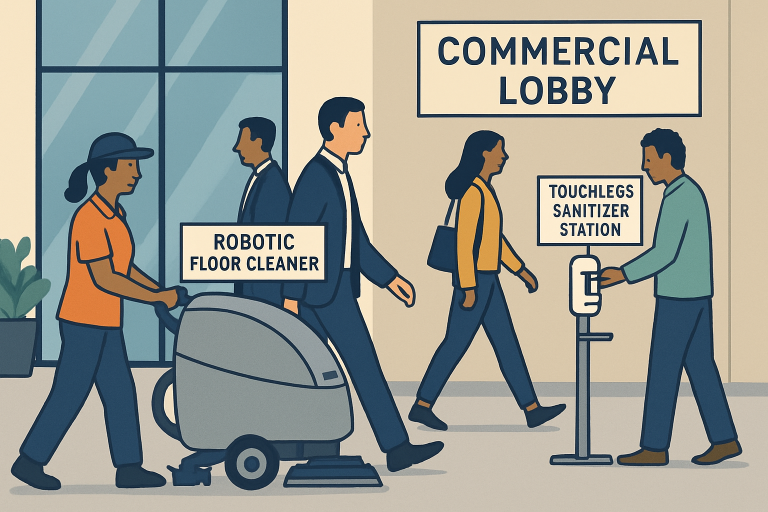
The emergence of modern cleaning equipment significantly boosts efficiency and consistency. Robotic floor clAdequated automated scrubbers can cover large areas with minimal human assistance, ensuring spotless floors even during the busiest times of day. Electrostatic sprayers help distribute disinfectants evenly, covering surfaces more thoroughly than traditional methods. In addition, sensor-based systems track occupancy in real time, allowing staff to focus on cleaning high-use areas when they matter most. These innovations reduce labor costs, improve results, and demonstrate a clear commitment to safeguarding public health. According to Buildings.com, the adoption of these technologies marks a new standard for maintenance in commercial settings.
Prioritizing High-Touch Surface Sanitation
Germs are most likely to be transmitted via high-touch surfaces, making frequent disinfection of these areas critical. Door handles, elevator buttons, shared computer stations, and railings require regular attention throughout the day. The most effective protocols use EPA-approved disinfectants paired with microfiber cloths to capture and remove pathogens. Encouraging hand hygiene through strategically placed sanitizer stations near these touchpoints further reduces the risk of illness spreading within the building.
Ensuring Restroom Cleanliness
The importance of restroom maintenance in high-traffic facilities cannot be overstated. Sinks, faucets, and toilet handles should be disinfected multiple times daily to prevent the buildup of germs. Soap, paper products, and hand sanitizers must be restocked frequently, while mirrors and counters need regular cleaning to maintain their appearance. Effective ventilation is critical for controlling odors, moisture, and the overall user experience. Well-maintained restrooms are an unmistakable sign of a building that prioritizes hygiene and respect for its occupants.
Implementing Effective Waste Management
A structured waste management plan minimizes health hazards and helps keep public spaces debris-free. Trash receptacles should be emptied before they overflow, and recycling policies should be clearly posted and followed by janitorial staff. Odor control in waste storage areas plays an important role in the perception of cleanliness. Proper handling of potentially hazardous waste, especially in medical or food service facilities, is essential for legal compliance and public safety.
Training Staff on Hygiene Protocols
An engaged cleaning staff is key to the successful execution of any hygiene program. Regularly updated training on safety procedures, the use of new cleaning products, and the operation of advanced cleaning machinery should be standard. Involving all building occupants in hygiene education creates a collective sense of responsibility, which has been shown to foster better health outcomes across organizations.
Utilizing Monitoring Systems for Cleanliness
Digital monitoring tools, such as vision systems and digital twins, allow facilities managers to base cleaning schedules on real-time insights rather than fixed timetables. These systems collect data on space utilization and cleanliness, enabling proactive intervention when standards drop. Some platforms provide alerts for missed tasks or spikes in activity, ensuring no area goes unchecked in fast-paced commercial buildings.
Conclusion
Managing hygiene in high-traffic commercial buildings is a dynamic challenge that demands careful planning, employee engagement, and the right mixture of innovation and traditional cleaning best practices. Businesses that embrace layered cleaning protocols, integrate technology, and prioritize staff training are better positioned to deliver a consistently safe and pleasant experience. By taking a comprehensive view of hygiene, organizations can protect their people, enhance their reputation, and comply with evolving public health recommendations.

How to Plan a Safer, Longer-Lasting Industrial Metal Fabrication Project in Lufkin, Texas

How to Keep Phoenix, Arizona Homes Pest-Ready During Monsoon Season
Floating Dock Contractors and the Basics of a Stable Dock System

How to Judge a Mountain Home Before You Buy in Aspen, Colorado

Building A Better Commercial Painting Plan From Prep To Completion

What Makes Legal Marketing Different From Marketing Almost Anything Else?

Why Bar Stools Can Completely Change the Feel of a Kitchen
Ways Proper Garage Door Installation Improves Performance

How to Compare Maine Neighborhoods Before Buying a Home in 2026

The Future of Home EV Charging: Trends, Benefits, and What Drivers Need to Know
How to Judge a Mountain Home Before You Buy in Aspen, Colorado
How to Plan a Safer, Longer-Lasting Industrial Metal Fabrication Project in Lufkin, Texas
Floating Dock Contractors and the Basics of a Stable Dock System